
From Manila: Banaue Rice Terraces 3-Day Hiking Adventure
From $295 per person
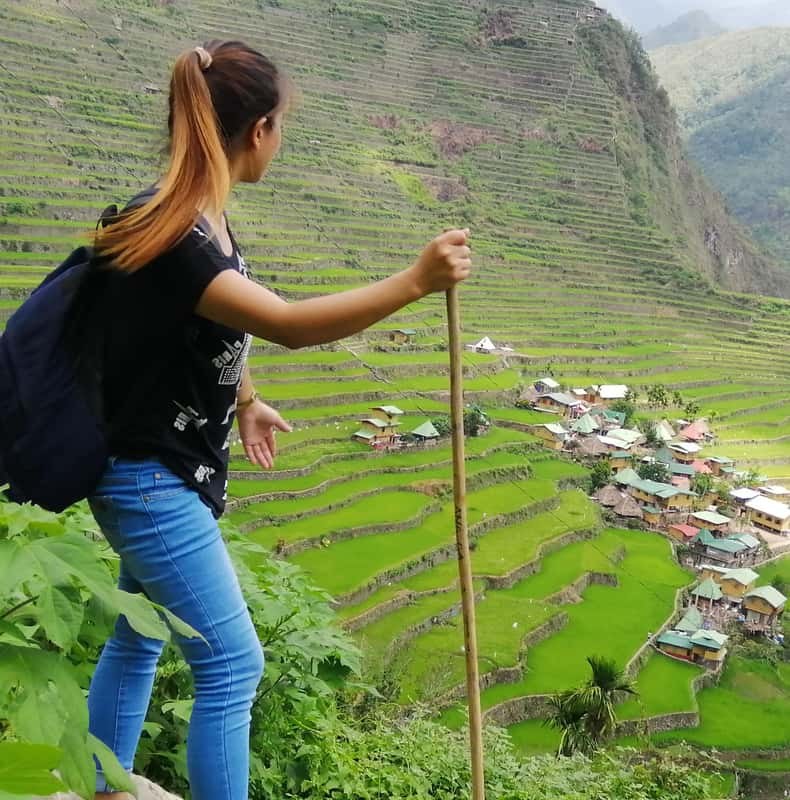
Check AvailabilityFree cancellation up to 24 hours beforeBatad is the reason most people come this far north. Terrace walls ring a natural bowl in tiers so steep the village perches on the rim above them, and no road reaches it. Getting in means a jeepney to a mountain saddle and then your own legs. Here is how the day runs, step by step.
It is one of the two clusters inside Banaue that carry the World Heritage listing, and it is on the itinerary of nearly every trip in the banaue rice terraces tour package listings. The other clusters, and how they differ, are on the terrace clusters page.
A jeepney or tricycle covers the twelve kilometres from Banaue town to the point everyone calls the saddle: a gap in the ridge where the road stops and the footpath starts. The road is rough, the drop-off is a hut and a barrier, and a small environmental fee is collected there in cash.
Guided trips arrange this vehicle as part of the fare, and one runs a private jeepney rather than a shared one. If you are travelling independently you negotiate at the tricycle stand in town, and the fare for the vehicle is the same whether one person rides or four.
From the saddle the path drops. It is cemented in stretches and rough in others, with steps, handrails in places and a steady downhill grade through vegetation until the valley opens. About forty-five minutes down, the whole amphitheatre appears at once, and that is the moment people come for.
Coming back up the same path takes closer to an hour, and that climb, rather than the descent, is what people underestimate. There is no vehicle shortcut and no alternative route.
Porters can be hired at the saddle to carry bags down and back up. If you are carrying several days of luggage rather than a daypack, this is money well spent, and it puts work into the village you are visiting.
The village is a cluster of houses on the rim and the upper terraces, with guesthouses and simple inns among them. Once you are down, moving around means walking on the terrace walls themselves — narrow, uneven, sometimes wet, and entirely normal for the people who farm them.
Most multi-day trips sleep here rather than driving back to Banaue, which is the single biggest difference between a trip that visits Batad and one that experiences it. Evenings are shared meals, bonfires and guitars.
From the village a rougher path drops to Tappiya Falls, a broad fall at the bottom of the valley with a deep, cold pool you can swim in. Allow an hour down and rather more back, on ground that is genuinely uneven. A separate small fee is collected on the way.
It is optional on most itineraries, and it is the part that turns a comfortable day into a hard one. Bring a swimsuit and a dry bag, and go before the middle of the afternoon.
| Stage | Time | Ground | Skippable? |
|---|---|---|---|
| Banaue to the saddle | ~45 min | Rough road, by vehicle | No |
| Saddle down to the viewpoint | ~45 min | Steps and cemented path, downhill | No |
| Viewpoint to the village | 20–30 min | Terrace walls, uneven | No |
| Village down to Tappiya Falls | ~1 hr | Rough path, steep in places | Yes |
| Tappiya back up to the village | 1–1.5 hr | The same path, climbing | Yes |
| Village back up to the saddle | ~1 hr | Steady climb | No |
What the walk into Batad asks of you, stage by stage.
Compare every Banaue Rice Terraces tour
Yes, if you can manage an hour of steady uphill and own shoes with grip. Fitness matters less here than footwear and patience — the path is a staircase rather than a scramble, and nobody is timing you. What you get for it is the version of this landscape that photographs cannot carry.
Sleeping in the village rather than turning straight around is what separates a good day from a memorable one, and every multi-day trip already builds that night in.
Bangaan is the direct substitute: visible from the road, a gentle half-hour walk down if you want it, and an inscribed cluster in its own right. The Hapao terraces are reachable by vehicle and have hot springs in the river below them.
A car-and-driver hire will take you to both plus the roadside viewpoint with no descent at all, which makes a genuinely good day. Those clusters are set out on the terrace clusters page.
The last vehicles back from the saddle to Banaue leave in the late afternoon, and the climb up takes an hour you may not have budgeted for. Plan the day around that, or stay the night in the village — every multi-day trip in the Banaue Rice Terraces tours already does exactly that.
Picked for what this guide covers, not for what sells.
From $295 per person
Check AvailabilityFree cancellation up to 24 hours before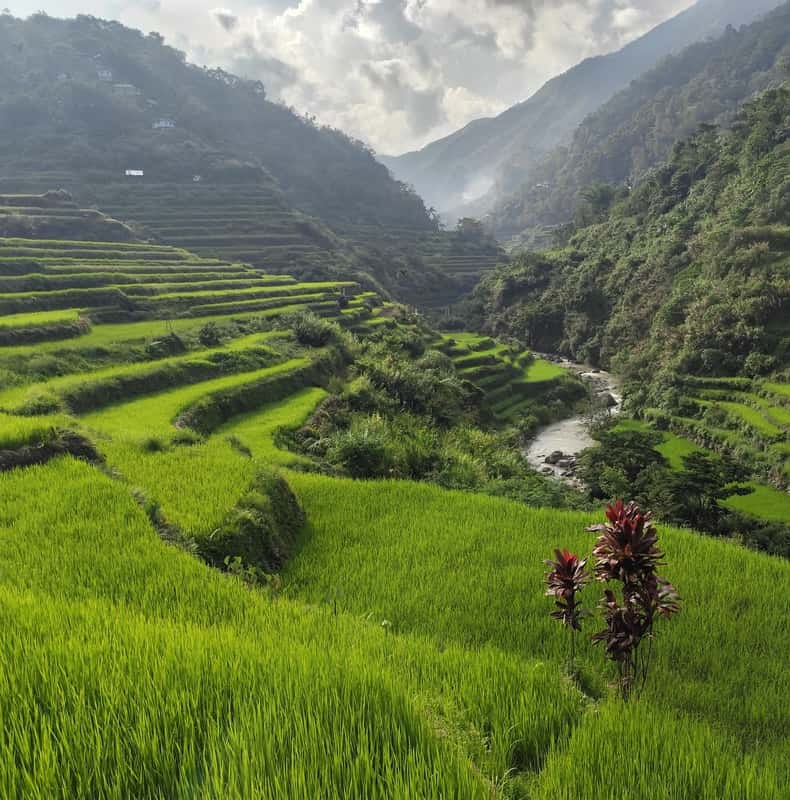
From $214 per person
Check AvailabilityFree cancellation up to 24 hours before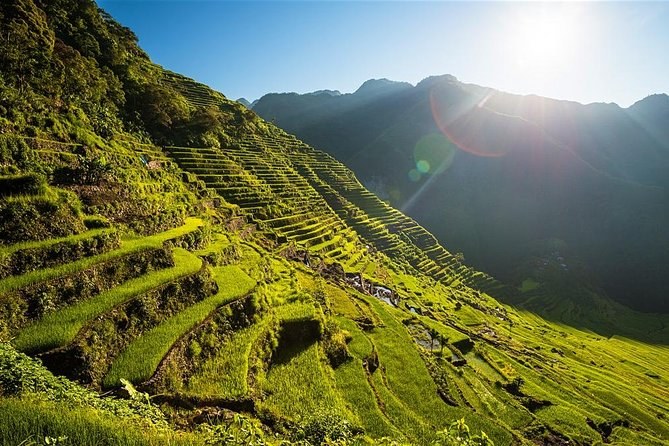
From $650 per person
Check AvailabilityNon-refundable once bookedCompare every trip that reaches it on Banaue Rice Terraces Tours.
By jeepney or tricycle to the Batad saddle, about twelve kilometres and roughly 45 minutes on a rough mountain road, then on foot down into the village. The walk from the saddle to the viewpoint takes about 45 minutes down and closer to an hour back up. Guided trips arrange the vehicle for you.
Yes, and most trips give you time to. The pool at the bottom is deep and cold, and the walk down from Batad village takes about an hour on a rough path with the return climb harder than the descent. Bring a swimsuit and a dry bag.