
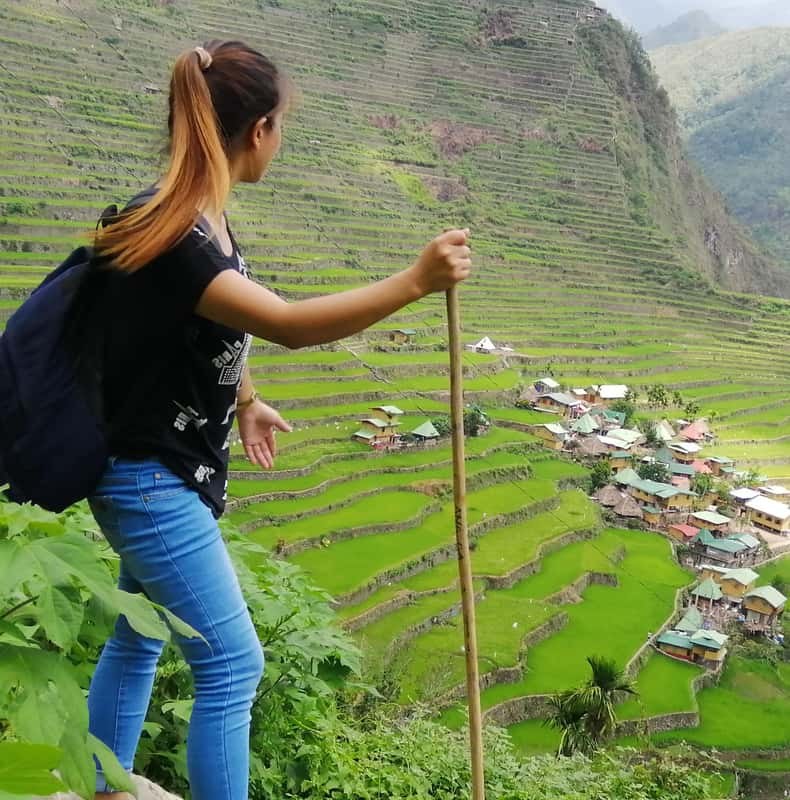
From Manila: Banaue Rice Terraces 3-Day Hiking Adventure
From $295 per person
Check AvailabilityFree cancellation up to 24 hours beforeThere is no airport and no fast road. Banaue sits about 420 kilometres north of Metro Manila and the journey takes nine to ten hours whichever way you do it, which is why almost everybody travels overnight and arrives at breakfast. Here is every route in, and what the last twelve kilometres to Batad involve.
Most of the banaue tour fold that journey into the fare, either as a scheduled night-bus seat or as a private vehicle sent to your hotel. The four that start in Banaue itself expect you to arrive under your own steam, which is why they cost less. Visiting the terraces has the fees and the fitness side.
| From | How | Time | Notes |
|---|---|---|---|
| Metro Manila | Night bus from Sampaloc or Cubao | ~9 hours | The standard route. Evening departure, arrives about 07:00 |
| Metro Manila | Private van or car with driver | 9–10 hours | Pre-dawn hotel pickup; several trips here run this way |
| Baguio | Public bus, changing in the highlands | 8–10 hours | A real route, but no trip listed here departs Baguio |
| Sagada | Van or bus via Bontoc | 4–5 hours | How the four-day Sagada itineraries connect the two |
| Cauayan (Isabela) | Road transfer | 3–4 hours | The nearest airport with scheduled flights |
Getting to Banaue, by where you are starting from.
Compare every Banaue Rice Terraces tour
Two operators run this route and both appear as meeting points on the trips listed here. Ohayami Trans departs from its terminal at Fajardo Street and Lacson Avenue in Sampaloc, Manila. Coda Lines departs from Monte de Piedad corner Maryland in Cubao, Quezon City.
Departures run through the evening, broadly between seven and ten o’clock, and arrival in Banaue is around seven the next morning. Buses are air-conditioned with comfort stops on the way. Expect a long night rather than an alarming one — one of the platforms publishes a transport sub-score of 3.9 against a guide score of 5.0, which is a fair summary of the experience.
Bring a warm layer for the bus itself. The air conditioning runs cold and the road climbs into the mountains overnight, which surprises people who packed for a tropical holiday.
Yes, by public bus, and it is a well-travelled route for anyone already in the Cordilleras — typically eight to ten hours with a change in the highlands. Plenty of independent travellers string Baguio, Sagada and Banaue together over a week.
What does not exist, among these trips, is one departing from Baguio. Every trip listed here starts in Metro Manila or in Banaue itself. If Baguio is your starting point, the practical options are to travel to Banaue independently and book one of the trips that begins there, or to route back through Manila.
Getting to Banaue is not the same as getting to the terraces you came for. From the town, the road to Batad runs about twelve kilometres and takes roughly forty-five minutes by jeepney or tricycle, ending at the saddle — a gap in the ridge where the road stops.
The full descent is set out on the Batad page.
There is very little public transport inside the valleys. Bangaan sits on the road out towards Mayoyao and is straightforward to reach; Hapao is about an hour west in Hungduan and needs a vehicle; Cambulo and Pula have no road at all and are reached on foot only.
This is the practical reason most people book a guided trip rather than improvising. A trip that includes in-valley transport is buying you something genuinely difficult to arrange on the morning, in a place where a missed connection costs a day.
If you are travelling independently, book the return bus seat when you arrive rather than on the day you leave. Departures are limited and they fill. Every multi-day trip in the Banaue Rice Terraces tours holds both seats for you as part of the fare.
Picked for what this guide covers, not for what sells.
From $295 per person
Check AvailabilityFree cancellation up to 24 hours before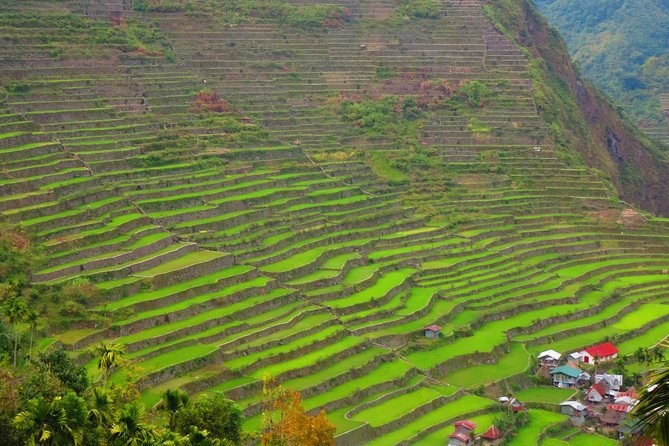
From $500 per person
Check AvailabilityFull refund with 6 days’ notice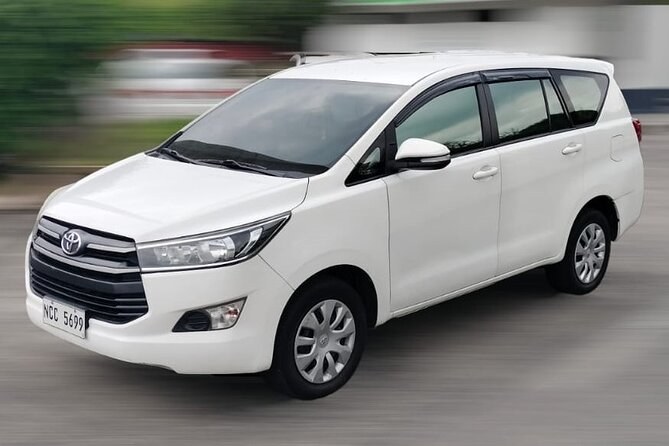
From $300 per person
Check AvailabilityFree cancellation up to 24 hours beforeCompare what each fare covers on Banaue Rice Terraces Tours.
By night bus, in about nine hours over roughly 420 kilometres. Ohayami Trans runs from Sampaloc in Manila and Coda Lines from Cubao in Quezon City, both leaving in the evening and arriving around seven the next morning. Most these trips include that seat, or drive you up privately instead.
No. There is no airport at Banaue and no regular flight into Ifugao province. The nearest airport with scheduled services is at Cauayan in Isabela, several hours away by road, and almost everyone travels overland from Manila instead.
You can reach Banaue from Baguio by public bus, and it is a common route for travellers already in the Cordilleras. None of the guided trips listed here departs from Baguio, though — every one starts in Metro Manila or in Banaue itself.