
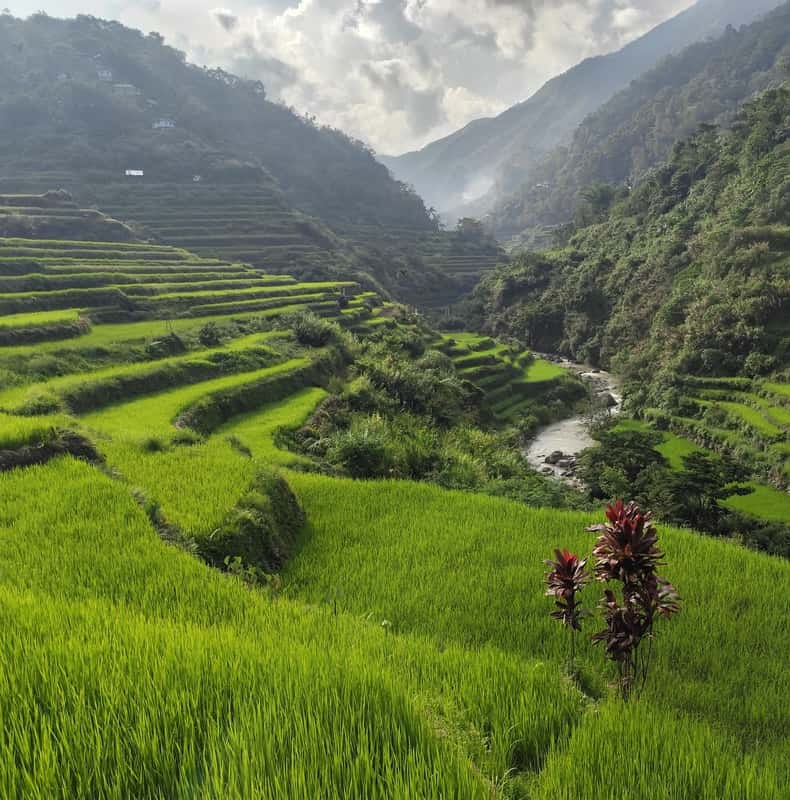
Banaue-Batad: 3-Days Guided Trek with Meals & Accommodation
From $214 per person
Check AvailabilityFree cancellation up to 24 hours beforeBanaue is a municipality, not a single view. What people call the Banaue Rice Terraces is really half a dozen separate terrace systems spread across steep valleys, each reached differently and each looking nothing like the others. Two of them carry a World Heritage listing. The one on the postcards does not.
Knowing which is which changes what you book, because the banaue rice terraces tour from manila on offer visit very different combinations of them. Here is each cluster, roughly in the order a three-day trip meets them.
| Cluster | Municipality | On the World Heritage list? | How you reach it |
|---|---|---|---|
| Batad | Banaue | Yes | Jeepney to the saddle, then on foot |
| Bangaan | Banaue | Yes | Roadside viewpoint, or walk in |
| Hungduan (including Hapao) | Hungduan | Yes | By road, about an hour west |
| Mayoyao Central | Mayoyao | Yes | By road, well east of Banaue |
| Nagacadan | Kiangan | Yes | By road, south towards Lagawe |
| The Banaue Viewpoint terraces | Banaue | No — National Cultural Treasure | Tricycle, fifteen minutes from town |
The five inscribed clusters of the Rice Terraces of the Philippine Cordilleras, listed by UNESCO in 1995, and where the famous Banaue view sits.
This is the view on the thousand-peso note and on almost every photograph captioned Banaue. It sits about fifteen minutes above the town by tricycle, on the roadside, with a cafe and a signboard and Ifugao elders in traditional dress who sit for photographs.
It is also the one cluster that is not part of the World Heritage inscription. Modern buildings in and around the terraces lowered its integrity score when the property was assessed, so it was left out. It remains a declared National Cultural Treasure, and it is still an extraordinary thing to stand in front of — it simply is not the thing UNESCO listed.
Go, and go early: the light is best before the middle of the morning and the cloud often closes in by afternoon. Then treat it as the introduction rather than the destination.
Batad is the one that people describe afterwards. Terrace walls curve around a natural bowl in tiers so steep and so tightly packed that the village sits on the rim looking down into its own fields. There is no road in: a jeepney or tricycle takes you twelve kilometres to a mountain saddle, and the last stretch is on foot.
It is an inscribed cluster, it is where Tappiya Falls is, and it is where most multi-day trips spend a night. If you only walk into one cluster, walk into this one. The full descent, the waterfall and the climb back out are set out on the Batad Rice Terraces page.
The second inscribed cluster inside Banaue municipality, and the easiest of the two to see: the road passes above it, and the whole village sits in the middle of its own terraces like an island. Cluster, village and valley read as one object from the viewpoint, which is exactly what a living cultural landscape is supposed to look like.
Most three and four-day trips stop here on the way out, often on the last morning. Walking down into it takes about half an hour and is considerably gentler than Batad.
Hapao lies west in the neighbouring municipality of Hungduan, about an hour by road, and is part of the inscribed Hungduan cluster. The terraces here are wider and flatter than Batad’s, running for kilometres along the valley with stone retaining walls rather than packed mud.
The draw beyond the terraces is the natural hot springs in the river below them, which is why Hapao tends to be the last stop on a trip rather than the first. Several three-day itineraries finish here, and the car-and-driver hire goes here rather than to Batad because a vehicle can reach it.
These two are walking villages, reachable on foot and nothing else. Cambulo sits between Banaue and Batad, about four to five hours from the road on either side, with terraces stacked around it and a river running through. Pula is smaller and higher, roughly halfway.
Neither is on the World Heritage list, and neither is the point. They are where the trekking trips stop for the night, and they are what travellers write about afterwards — a children’s singing programme, a bonfire, rice wine, a homestay run by the family that farms the terrace outside the door.
Two construction types run through these valleys and you can tell them apart on sight. Stone-walled terraces use fitted dry stone, hold their shape for generations and are the ones that photograph as sharp lines. Mud-walled terraces are packed earth held by grass roots, cheaper to build and far more work to keep.
Batad and Bangaan are largely stone. Much of the wider system is not. That difference is most of the reason maintenance is such hard, continuous labour, and why abandoned plots slump within a few seasons.
Not every terrace you see is in production. Plots go out of use when the family working them moves to wage work in the lowlands or abroad, and a terrace nobody floods dries out, cracks and eventually slips.
This was the substance of the eleven years the property spent on UNESCO’s danger list, set out on the history page. It is also the honest argument for the village homestay economy: the trekking trips through Cambulo and Batad put income into exactly the households that maintain walls.
The honest answer is a viewpoint and a walk, not a list of clusters. Almost every trip pairs the roadside Banaue Viewpoint with a descent into Batad, and that combination gives you the photograph and the experience that photograph cannot carry.
Beyond that, the choice is whether you want a second walking day (Cambulo and Pula), a gentler second cluster (Bangaan), or a soak at the end (Hapao). The trips here are built around those three answers.
The property UNESCO inscribed in 1995 is called the Rice Terraces of the Philippine Cordilleras, and it was the first place ever added to the World Heritage list as a cultural landscape — a category created for places shaped by people and nature together rather than by one or the other.
Picked for what this guide covers, not for what sells.
From $214 per person
Check AvailabilityFree cancellation up to 24 hours before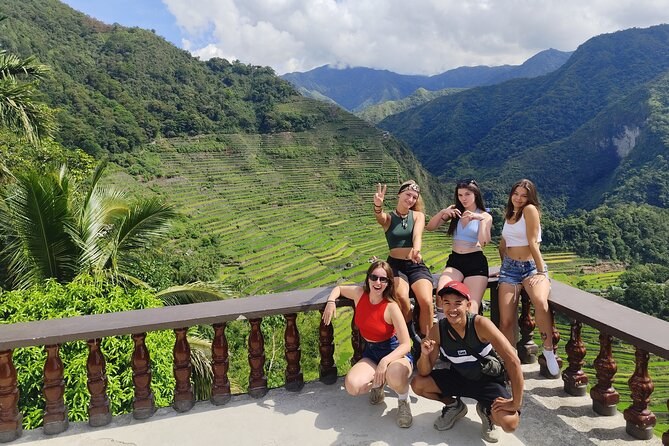
From $236 per person
Check AvailabilityFree cancellation up to 24 hours before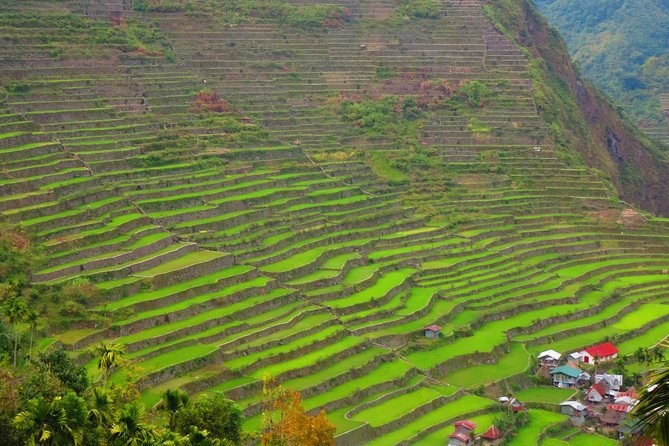
From $500 per person
Check AvailabilityFull refund with 6 days’ noticeEvery trip compared side by side on Banaue Rice Terraces Tours, and best time to visit covers what each cluster looks like month by month.
Partly, and the distinction is worth having. The inscribed property is the Rice Terraces of the Philippine Cordilleras, listed in 1995, and it covers five clusters — two of which, Batad and Bangaan, sit inside Banaue municipality. The famous roadside terraces at the Banaue Viewpoint are not part of the inscription, though they are a declared National Cultural Treasure.
Batad if you only do one. It is the walled amphitheatre that carries the World Heritage listing, and reaching it on foot is the experience people describe afterwards. Add the Banaue Viewpoint for the classic photograph, Bangaan for a village sitting inside its own terraces, and Hapao if you want hot springs.