
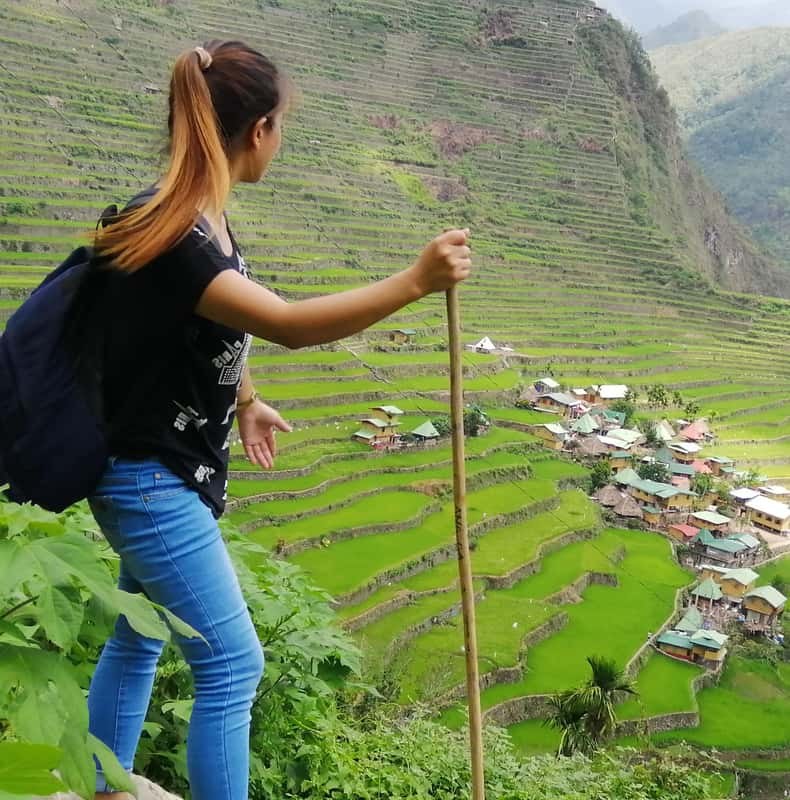
From Manila: Banaue Rice Terraces 3-Day Hiking Adventure
From $295 per person
Check AvailabilityFree cancellation up to 24 hours before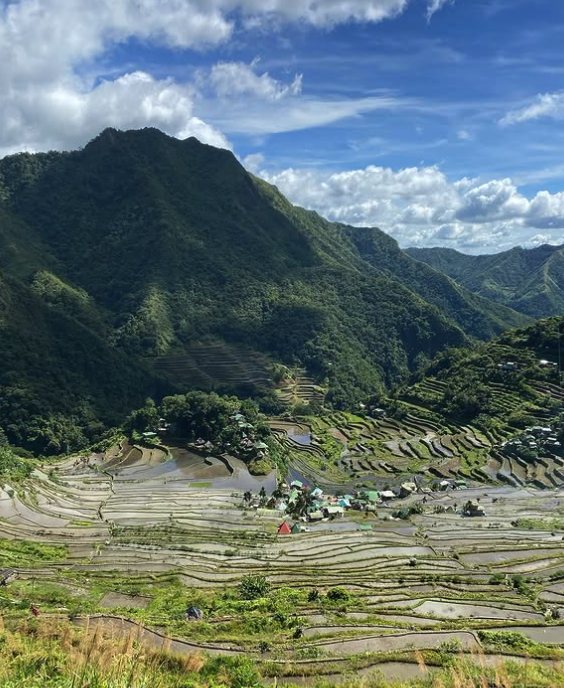
The two names are used almost interchangeably in tour listings, and they are not the same thing. Banaue is a municipality in Ifugao province. Batad is one village and terrace cluster inside it, about twelve kilometres east, reached by a road that stops at a mountain saddle.
What people mean by “the Banaue Rice Terraces” is usually the roadside viewpoint above the town: fifteen minutes up by tricycle, a cafe, a signboard, and the view that appears on the thousand-peso note. What they mean by Batad is a walled amphitheatre you can only reach on foot.
Both are worth your time. They ask completely different things of you, and only one of them is on the World Heritage list.
Batad is. The roadside viewpoint terraces are not.
The inscribed property is the Rice Terraces of the Philippine Cordilleras, listed in 1995 as the first cultural landscape ever added to the World Heritage list. It covers five clusters: Batad and Bangaan inside Banaue municipality, plus Mayoyao Central, Hungduan and Nagacadan elsewhere in Ifugao.
The famous terraces above Banaue town were assessed and left out, because modern building in and around them had lowered their integrity. They carry a different protection — a declared National Cultural Treasure under Philippine law — and almost every tour listing still describes them as UNESCO-listed.
This is not a technicality that only matters to a committee. If the World Heritage listing is part of why you are travelling nine hours north, the roadside viewpoint on its own does not deliver it. Walking into Batad does.
Harder than a viewpoint and easier than people fear. A jeepney or tricycle covers the twelve kilometres from Banaue town to the saddle in about forty-five minutes on rough road. From there the path drops: roughly forty-five minutes down steps and cemented stretches to the point where the amphitheatre opens, then another twenty into the village.
The climb back out takes closer to an hour and it is the part people underestimate. There is no vehicle shortcut and no alternative route. Porters can be hired at the saddle if you are carrying more than a daypack, which is money well spent and money that stays in the village.
Yes, and it takes an hour. It is a genuinely arresting view, it is free of any walking, and the Ifugao elders in traditional dress who sit for photographs there are part of what makes it memorable rather than a detraction from it.
Treat it as the introduction rather than the destination. Almost every trip pairs the viewpoint with a descent somewhere, and that pairing is the correct answer for nearly everybody.
Bangaan is the second inscribed cluster inside Banaue and the gentler of the two: the road passes above it and the whole village sits in the middle of its own terraces. A half-hour walk down if you want it, or a good look from the road if you do not.
Hapao lies west in Hungduan, about an hour by road, with wide stone-walled terraces and natural hot springs in the river below. It is the usual last stop on a three-day trip and the one a vehicle can reach.
Cambulo and Pula are walking villages, four to five hours on foot from a road on either side. Neither is inscribed and neither needs to be — they are where the trekking trips sleep, and they are what travellers describe afterwards. The terrace clusters page covers all six in detail.
| Cluster | Access | Effort | Inscribed? | Best for |
|---|---|---|---|---|
| Banaue Viewpoint | Tricycle, 15 min | None | No | The photograph, in an hour |
| Batad | Jeepney then on foot | 45 min down, 1 hr up | Yes | The amphitheatre, and a village night |
| Bangaan | From the road | Optional 30 min | Yes | A village inside its terraces, gently |
| Hapao | By road, ~1 hr west | Short walk to the river | Yes | Hot springs and wide stone terraces |
| Cambulo & Pula | On foot only | 4–5 hrs each way | No | Village evenings and the trail itself |
What each cluster asks of you, and what you get.
Compare every Banaue Rice Terraces tour
The viewpoint plus a look down at Bangaan from the road. Both are reachable by vehicle, both are genuinely beautiful, and you will have the images you came for without committing to a descent you may not have time to climb back out of.
Attempting Batad as a day trip from Banaue is possible and it is a long day: forty-five minutes each way in a vehicle, an hour down, an hour back up, and a waterfall in between if you want it. Doable, and it leaves nothing spare.
Batad, with a night in it. This is the answer almost every trip is built around, and it is built that way because it works. You come down in the afternoon, you sleep in the village, and you walk out the next morning having actually been somewhere rather than looked at it.
With three days you can add Tappiya Falls below Batad, or route through Cambulo on foot, or come out past Bangaan and Hapao. Any of those is a good use of the third day.
Then the honest answer is that a real version of this trip still exists. Bangaan from the road, the Hapao terraces and their hot springs, and the roadside viewpoint make a genuinely good two days with no serious walking at all.
A car-and-driver hire from Manila does exactly this, and the listing for it is clear about what it is: transport, not a guided tour. Visiting the terraces sets out what the ground asks of you at each cluster.
If steep uneven ground is the constraint, say so when you enquire rather than booking and hoping. Operators on this route routinely adjust routes, and the ones whose reviews name the guide are the ones who do it well.
Trying to see four clusters in three days. It is physically possible and it produces a trip spent mostly in a vehicle, looking at valleys you could have walked through.
Pick a viewpoint, one proper walk, and one extra thing — a waterfall, a hot spring, or a village night. That is the shape of every trip that people come back happy from, and it is why the itineraries here look so similar to each other.
The saddle is a gap in a ridge with a hut, a barrier and a view of nothing much. Then the path turns and starts dropping, and for the first twenty minutes you are walking through vegetation with the valley closed off on both sides.
The amphitheatre appears all at once. There is a point on the path where the ground falls away and the whole bowl is in front of you — terrace walls stacked in curves from the river up to the village on the rim, with roofs among them. That moment is what people describe when they get home, and no photograph taken from the viewpoint reproduces it.
Below that the ground changes character. You are walking on the walls themselves, which are narrow, uneven and often wet, with a drop on one side and a planted field on the other. It is not exposed in a mountaineering sense. It does ask you to watch your feet for an hour.
The viewpoint is a negotiated tricycle fare from town plus a small local charge at the top. Cheap, quick, and the same whether you are one person or three.
The Batad saddle is a jeepney or tricycle fare for the vehicle rather than per person, which is why it is much better value shared. Independent travellers arriving alone in low season routinely find this the most expensive single leg of their trip, and the fix is to ask at your guesthouse in the morning whether anyone else is heading out.
Hapao needs a vehicle for the hour west and is usually bundled into a trip rather than arranged separately. Cambulo and Pula cost nothing to reach except four to five hours of walking. Visiting the terraces has the fee picture in full.
Less than you would think, but not nothing. Batad’s amphitheatre is the most dramatic in any state, because the shape does the work — flooded, green or gold, the tiers read the same.
The roadside Banaue terraces depend more on the crop, and they are at their least photogenic in the weeks after harvest when the fields are stubble and the walls are being repaired. If you are travelling in November and only have time for one, weight the choice towards Batad. Best time to visit has the month-by-month picture.
Banaue for the view, Batad for the trip. Do the roadside viewpoint because it takes an hour and it is remarkable. Then walk down into Batad, because that is the World Heritage cluster, that is where the amphitheatre is, and that is the day you will describe when you get home.
Everything else — Bangaan, Hapao, Cambulo, Tappiya Falls — is a good third element rather than a competing choice.
By jeepney or tricycle to the Batad saddle, about twelve kilometres and roughly 45 minutes on a rough mountain road, then on foot down into the village. The walk from the saddle to the viewpoint takes about 45 minutes down and closer to an hour back up. Guided trips arrange the vehicle for you.
No. Every listing states that it is not wheelchair accessible, and the terrain makes that unavoidable — the villages are reached by footpath along terrace walls. Two operators do state that service animals are welcome.
Partly, and the distinction is worth having. The inscribed property is the Rice Terraces of the Philippine Cordilleras, listed in 1995, and it covers five clusters — two of which, Batad and Bangaan, sit inside Banaue municipality. The famous roadside terraces at the Banaue Viewpoint are not part of the inscription, though they are a declared National Cultural Treasure.
Batad if you only do one. It is the walled amphitheatre that carries the World Heritage listing, and reaching it on foot is the experience people describe afterwards. Add the Banaue Viewpoint for the classic photograph, Bangaan for a village sitting inside its own terraces, and Hapao if you want hot springs.
Every guided way into the terraces is compared on price, walking distance and what the fare covers: banaue rice terraces tour. The full list sits on Banaue Rice Terraces Tours.
Trips built around the viewpoint-plus-a-walk shape this guide recommends.
From $295 per person
Check AvailabilityFree cancellation up to 24 hours before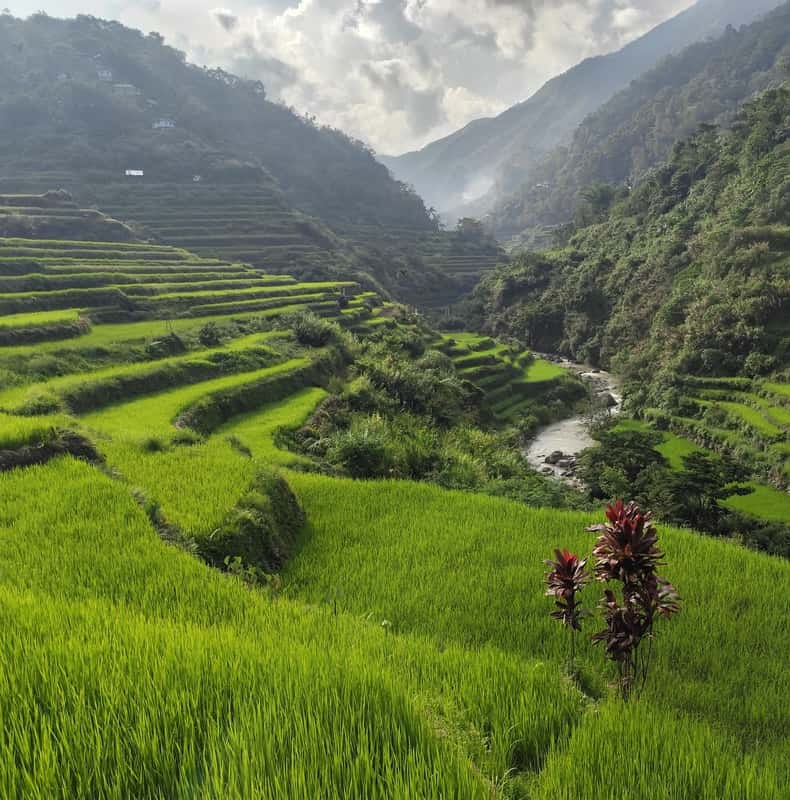
From $214 per person
Check AvailabilityFree cancellation up to 24 hours before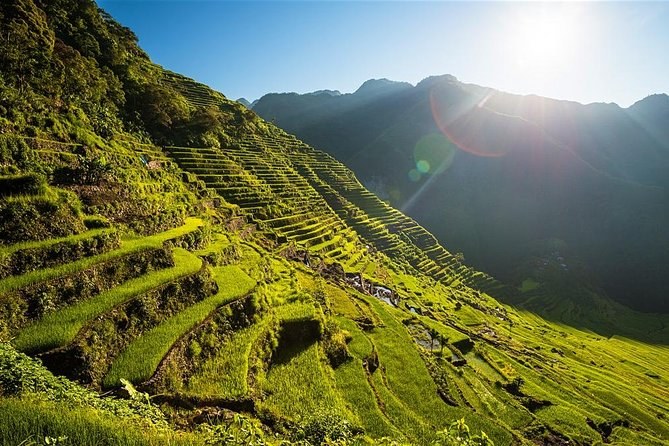
From $650 per person
Check AvailabilityNon-refundable once booked