
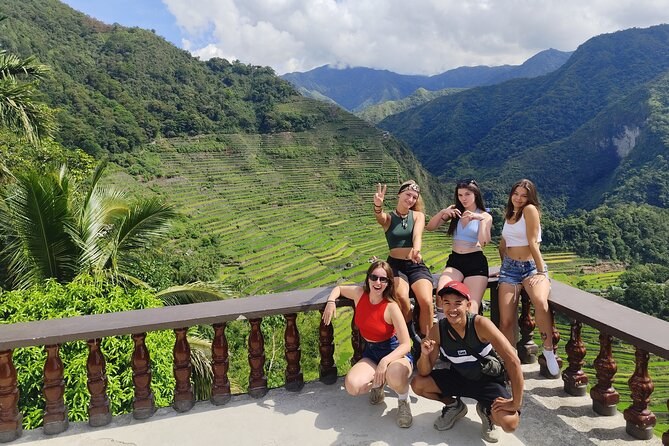
Banaue Rice Terraces Hiking Tours
From $236 per person
Check AvailabilityFree cancellation up to 24 hours before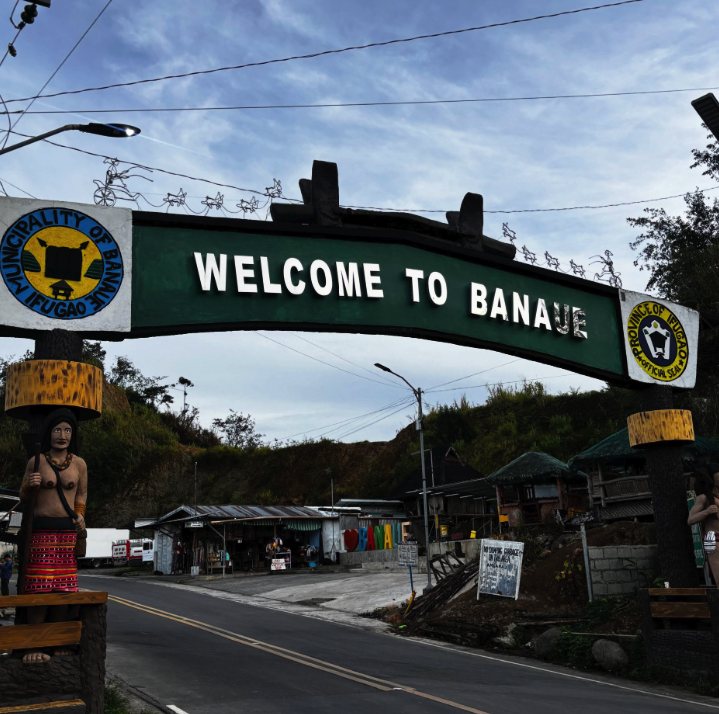
You can reach Banaue, sleep there, ride up to the viewpoint and get yourself to the Batad saddle entirely on your own. Plenty of travellers do, and it costs less than a guided fare.
What is genuinely difficult alone is the part between villages: the trails from Banaue over to Pula, Cambulo and Batad are terrace walls and footpaths without signage, and they cross land people are farming. That is where a guide stops being a convenience.
The night bus sells seats to anybody. Ohayami Trans from Sampaloc and Coda Lines from Cubao both run evening departures arriving in Banaue around seven the next morning, for a fare in the region of a thousand pesos.
Book ahead in the dry months and, more importantly, book your return seat when you arrive rather than on the day you leave. Departures are limited and they fill. Getting there has both terminals.
A tricycle from Banaue town to the main viewpoint takes about fifteen minutes, and you negotiate the fare at the stand. There is a small local fee collected at the top, payable in cash.
This is genuinely straightforward and there is no reason to book a tour for it alone. The same applies to the Ifugao House Museum in town.
Jeepneys and tricycles run the twelve kilometres from Banaue to the saddle, and you negotiate at the stand. The fare is for the vehicle rather than per person, so it is much better value split between four than paid alone — which is the single most common complaint from independent travellers on this route.
From the saddle the path down to Batad is cemented in stretches and obvious enough to follow without a guide. Getting into Batad on your own is a reasonable thing to do.
If you are travelling alone and want the saddle, ask at your guesthouse in the morning whether anyone else is going. Sharing a jeepney turns the single most expensive independent leg into a modest one.
Between Banaue, Pula, Cambulo and Batad there is no road, no signage and no public transport. The route is terrace walls, irrigation channels and footpaths through fields that belong to people, and it takes four to five hours between villages.
Guides on this route are not narrating a landscape you could read yourself. They know which wall is a path and which is somebody’s crop, where the descent is loose after rain, and which household has a bed free tonight. Local guides can be hired in Banaue or at the saddle without booking a full tour.
The path from Batad village down to the falls is rough, steep in places, and reportedly walkable without a guide — it is cemented for much of its length. A separate small fee is collected on the way.
Whether you should is a different question from whether you can. It is an hour down and rather more back up on uneven ground, and there is nobody at the bottom if something goes wrong.
Banaue town has guesthouses and small hotels and you can turn up. Batad village does not: it holds very few rooms, they are simple, and in the dry months they go first. There is no way to check availability from the saddle, and the walk back up is an hour.
This is the thing that most often converts an independent plan into a booked one. A guided trip has already reserved the bed you would otherwise be walking an hour uphill to discover does not exist.
It is not. English is widely spoken in Banaue and Batad, alongside Ifugao languages and Tagalog, and every guided trip on this route runs in English. Two also offer Tagalog and one guides in French.
Independent travellers negotiate tricycle fares, book beds and ask directions in English without difficulty. What a guide adds is not translation — it is knowing which terrace wall is a right of way.
| What | Independent | Inside a guided fare |
|---|---|---|
| Night bus, both ways | You book and pay | Included on most trips |
| Jeepney to the saddle | Negotiated, per vehicle | Included; one trip runs a private jeepney |
| Local fees at the barriers | Cash at each one | Usually covered — the card says |
| Homestay beds | Turn up and hope, in Batad | Reserved for you |
| A guide between villages | Hired locally, per day | Included |
| Meals | You buy them | Varies: some trips cover all, some none |
Doing it independently against booking a guided trip, per person.
Compare every Banaue Rice Terraces tour
For the viewpoint and a day at the saddle, no. Do that yourself.
For anything that crosses between villages or sleeps below the saddle, the honest answer is that the fare is buying you things that are genuinely hard to assemble on the morning — a bed in Batad, a guide who knows the route, transport in a valley with almost none, and on several trips every meal. The cheapest fare here is a three-day guided trek, which surprises people who assume independent is always cheaper.
Get yourself to Banaue on the night bus, then book a trip that starts there. Four of the trips listed here do exactly that, and they cost less than the Manila-start versions precisely because the journey is not included.
You keep control of your own dates and your own route north, and you hand over the part that is actually difficult. If you are already in the Cordilleras — coming from Baguio or Sagada — this is almost always the right shape.
The pieces are: a bus fare each way, a tricycle to the viewpoint, a jeepney to the saddle, a bed for two nights, meals, the local fees at three barriers, and a guide if you want one. None of it is expensive individually.
Where independent travel stops being cheaper is the vehicle legs, which are priced per vehicle. Split four ways they are trivial; paid alone they are the single biggest line in the budget. This is why solo travellers frequently find the guided fare competitive and pairs find it slightly more.
The honest comparison is not fare against fare. It is fare against fare plus the value of not spending your first morning negotiating transport in a town you arrived in at seven o’clock.
Four of the trips listed here begin in Banaue itself rather than Manila, and they exist precisely for travellers who got themselves north. They cost meaningfully less than the Manila-start versions because the nine-hour journey is not inside the fare.
One offers free pickup anywhere around Banaue and meets at the Tourism Office, which removes the one genuinely awkward piece of arriving independently. Another is the cheapest guided trek on the route.
If you are already in the Cordilleras — coming down from Sagada or up from Baguio — this is almost always the right shape: keep control of your own route, hand over the part that is actually hard.
You can. Local guides can be engaged in Banaue town or at the Batad saddle for a daily rate, and this is a normal thing to do rather than a favour. It is also how a good deal of the money from tourism reaches the households that maintain terrace walls.
What you do not get is a bed reserved in Batad, transport arranged for the following morning, or somebody to sort it out if a route is impassable. Those are the pieces a booked trip is really selling on this route.
Do not attempt the Banaue-to-Cambulo-to-Batad crossing without a guide in the wet season, and do not plan to arrive at the Batad saddle in the late afternoon hoping to find a bed. Both are how straightforward days turn into difficult nights. Every trip in the Banaue Rice Terraces tours listings has the bed booked before you set off.
Beyond that, the usual: shoes with grip, cash in small notes, and telling somebody where you are going on a day when your phone will have no signal.
Small local tourism and environmental fees are collected in cash at the viewpoint and at the Batad saddle, and a separate fee applies at Tappiya Falls. No official body publishes a current schedule, so bring pesos in small notes. Most guided trips here pay these for you as part of the fare.
No. Every guided trip here includes the guide in the fare, and several include a second trekking guide for the village crossings. Tips are not included on any of them and are appreciated rather than expected.
By night bus, in about nine hours over roughly 420 kilometres. Ohayami Trans runs from Sampaloc in Manila and Coda Lines from Cubao in Quezon City, both leaving in the evening and arriving around seven the next morning. Most these trips include that seat, or drive you up privately instead.
In village homestays and small inns, mostly in Batad, Cambulo or Banaue town. Rooms are simple — a bed, a shared bathroom, cold water in some places — and that is part of what people come for. Every multi-day trip here includes the nights in its fare.
Every guided way into the terraces is compared on price, walking distance and what the fare covers: banaue tour package. The full list sits on Banaue Rice Terraces Tours.
Trips that begin in Banaue, for travellers who got themselves north.
From $236 per person
Check AvailabilityFree cancellation up to 24 hours before
From $300 per person
Check AvailabilityFree cancellation up to 24 hours before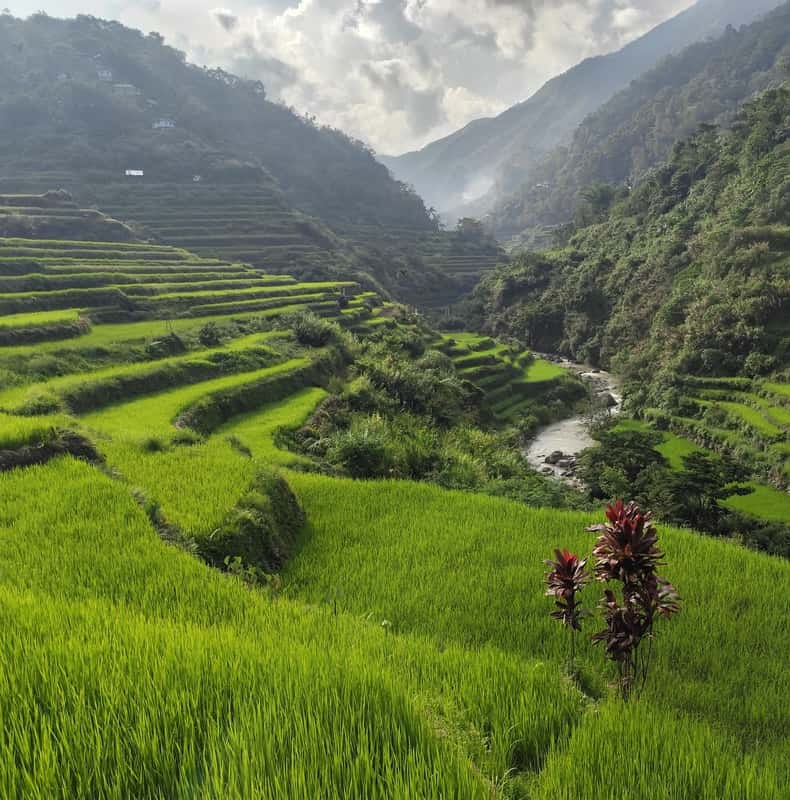
From $214 per person
Check AvailabilityFree cancellation up to 24 hours before