
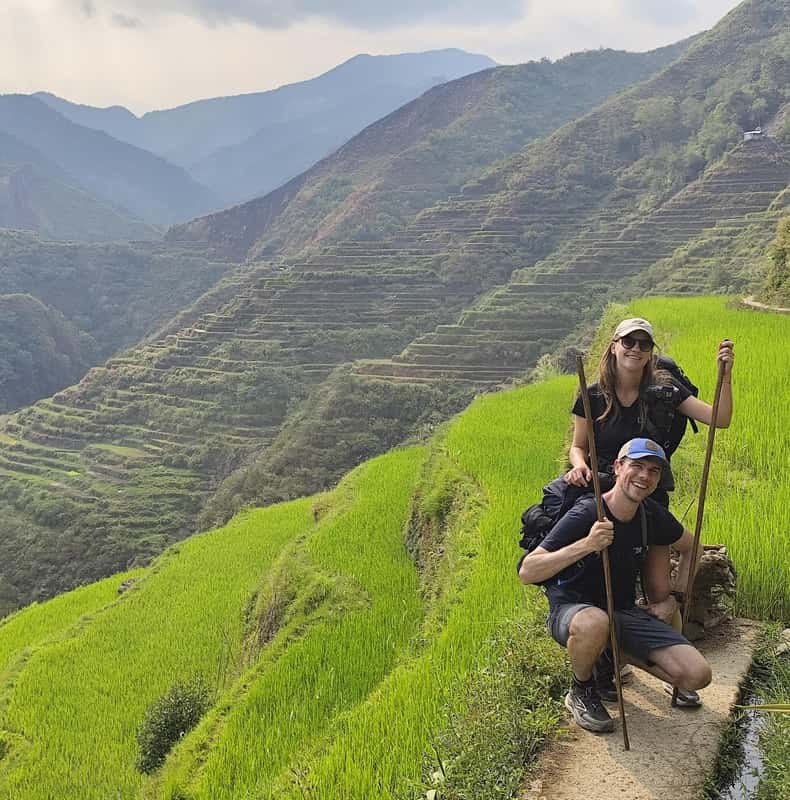
Banaue Rice Terraces and Sagada 4-Day Tour
From $612 per person
Check AvailabilityFree cancellation up to 24 hours before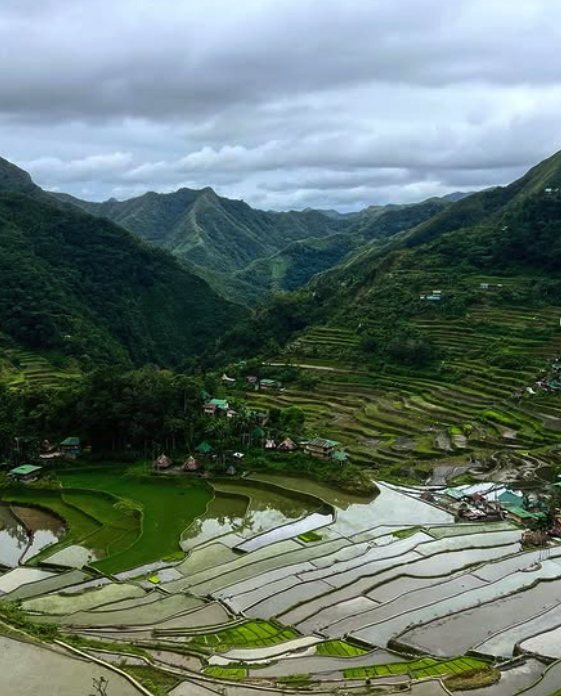
These are working fields on a single main annual cycle, and what they look like is a direct read-out of where that cycle has reached. Bare and flooding. Flooded and mirroring. Deep green. Gold, then cut.
The photograph that made you want to come was taken in exactly one of those states. Turning up in another does not ruin a trip, but it does mean seeing a different place from the one you pictured, and that is worth deciding on purpose.
From roughly December through April the terraces are ploughed and flooded. On a still morning the whole hillside holds the sky, tier after tier, with the dark lines of the retaining walls between sheets of silver.
This coincides with the driest and coolest weather of the year and the clearest ridge lines. It is the version of these terraces that appears in almost every photograph that goes anywhere, and it is why February and March are the busiest months on the route.
From May the rice grows in and the terraces turn the emerald of the postcards, deepest through July and August. Every terrace edge is picked out by the crop rather than by water, and the valleys look their most alive.
The trade is rain. The wet season runs roughly June to October and the Cordillera catches a great deal of it. Trails become slippery, cloud sits in the valleys after lunch, and typhoons are possible.
Ripe rice turns the terraces gold and the whole system is cut by hand. Walking through a harvest is the most alive these valleys look, and it is the briefest of the four states — typically June into July, varying by cluster and altitude.
Nobody publishes a harvest date because it is not that kind of calendar. Ask an operator when you enquire rather than planning to the week.
The wettest stretch and the one most travellers avoid, which is exactly why it is worth considering. Emptier trails, homestay availability without booking months ahead, and guides who are not working back to back.
The terraces are still deep green. With decent waterproofs this is a genuinely good trade, and it is the season to pick if having Batad largely to yourself matters more than a cloudless sky.
These valleys do not plant on a single date. Altitude, water availability and the decisions of individual households all move the cycle, so Batad can be a fortnight behind Hapao and both can differ from the roadside terraces above Banaue town.
The practical consequence is that a single trip in the shoulder weeks can show you two states at once — one valley flooded and mirroring, the next already green. That is a good outcome rather than a compromise, and it is one reason itineraries that cross several clusters hold up in any month.
Wet season in the Cordilleras is not a wall of rain from June to October. It is clear mornings, cloud building through the middle of the day, and heavy showers in the afternoon and overnight, with occasional multi-day systems when a typhoon passes north of Luzon.
That pattern is why itineraries start early. A trip that has you walking by eight and into a village by mid-afternoon works perfectly well in August. A trip that plans a four-hour crossing after lunch does not, which is why none of them do.
Trails are the real cost rather than the rain itself. Wet terrace walls are slick, the stepped descent into Batad holds water, and everything takes longer than the stated time.
| Months | The terraces | Weather | Crowds | Trails |
|---|---|---|---|---|
| Dec–Feb | Ploughed and flooding | Coolest, driest | Building | Firm |
| Mar–Apr | Flooded — the mirror | Dry, warming | Busiest | Firm |
| May–Jun | Greening, first harvest | Hot, rains starting | Moderate | Mixed |
| Jul–Aug | Deepest green | Wet, typhoons possible | Moderate | Slippery |
| Sep–Oct | Green turning | Wettest | Quietest | Slippery |
| Nov | Post-harvest, walls repaired | Rain easing | Low | Improving |
What the terraces are doing, and what the weather does with it.
Compare every Banaue Rice Terraces tour
Season changes the trails as much as the colour. In the dry months the paths are firm and the terrace walls are easy to read. From June the same walls are slick, the steps hold water, and the descent into Batad takes longer than the times suggest.
None of this closes anything. It is an argument for boots with a real sole, and for not planning the tightest possible itinerary in August. The Batad Rice Terraces page has the descent stage by stage.
A trekking trip that crosses between villages is at its best in the dry months, when four to five hours on terrace walls is a pleasure rather than a negotiation. A trip built around viewpoints and a vehicle barely notices the season.
If you are coming in the wettest stretch and want to hedge, a route that reaches the clusters by road gives you a good day whatever the sky does.
The mirror months are the ones to book early for, and the constraint is beds rather than seats. Batad village holds very few rooms and they go first. A trip that includes accommodation has already solved that, which is worth considerably more in February than in September.
Bus seats are the other thing that fills. Most trips here hold both directions as part of the fare.
If the reflection shot is why you are coming, aim for February or March and walk in early. The water is stillest before the middle of the morning, and cloud tends to build in the valleys after lunch.
Typhoon season overlaps the greenest months and a forecast can move at a few days’ notice. That is an argument for a flexible booking rather than for a different destination.
Choose a trip whose refund window is 24 hours rather than six days if your dates are not fixed. About half the trips here offer that and about half do not, and one refunds nothing at all. The banaue rice terraces tour comparison prints every window.
Whatever the month, the useful hours are early. Cloud builds in these valleys through the day and by mid-afternoon the ridges are frequently gone. That is true in the dry season too, where mornings are reliably clear and afternoons are not.
The reflection shot in the flooded months needs still water, which means before the wind picks up. The green months reward late afternoon on the rare clear day, when low sun rakes across the terrace edges and the walls throw shadows that make the tiers legible.
Practically: be walking by eight, and treat anything after three as a bonus. Every itinerary here is already built that way, which is why the days start early.
Banaue’s largest celebration is Imbayah, which takes its name from the feast marking a family’s rise to kadangyan status in traditional Ifugao society. Gongs, dancing, rituals and shared food and rice wine.
It has historically run in April, at intervals of around three years rather than annually, and editions are announced locally. Anyone planning a trip around it should confirm with the municipality before booking flights — the dates move and sources disagree. The history page has the background.
Beyond Imbayah the calendar that matters is agricultural rather than ceremonial. Planting and harvest bring the terraces alive with people, and that is worth more to most visitors than any scheduled event.
Colder than most people pack for. Banaue sits high enough that evenings are cool year round and genuinely cold between December and February. Village homestays are simple and unheated, and hot water is not universal.
A warm layer and something to sleep in are worth the space. The same layer earns its place twice, because the overnight bus runs its air conditioning hard and the road climbs while you are trying to sleep.
Late November and early December sit between the harvest tidy-up and the flooding, and almost nobody targets them. The terraces are at their plainest — stubble, bare walls, repair work under way — and that is exactly what makes them interesting if you care how the system is maintained.
You will see walls being rebuilt by hand, water channels being cleared, and the labour that the rest of the year hides. Guides are available at short notice and beds are easy. It is the wrong month for a photograph and a good one for understanding what you are looking at.
February or March if the photograph matters most: dry, cool, and the terraces under water. June or early July for full green with a chance of catching a harvest. September or October if you would rather have the trails largely to yourself and do not mind rain.
There is no bad month. There is only the difference between the terraces you expected and the ones in front of you. Best time to visit has the practical detail on each.
Yes. Night buses north from Manila sell out in peak months and the village homestays in Batad and Cambulo hold very few beds. Book a week ahead between December and May, and at least three or four days at any other time.
Trips run in rain, and the Cordillera gets a lot of it between July and October. Trails become slippery rather than closed, and guides adjust the route. If you want the freedom to move your dates when a typhoon is forecast, book one of the trips with a 24-hour refund window rather than a six-day one.
Yes, by the families who live among them. That is the whole point of a living cultural landscape and the reason the walking routes cross private land. Stay on the paths your guide uses and ask before photographing people at work.
Every guided way into the terraces is compared on price, walking distance and what the fare covers: Banaue Rice Terraces Tours. The full list sits on Banaue Rice Terraces Tours.
Trips that run in every season this guide describes.
From $612 per person
Check AvailabilityFree cancellation up to 24 hours before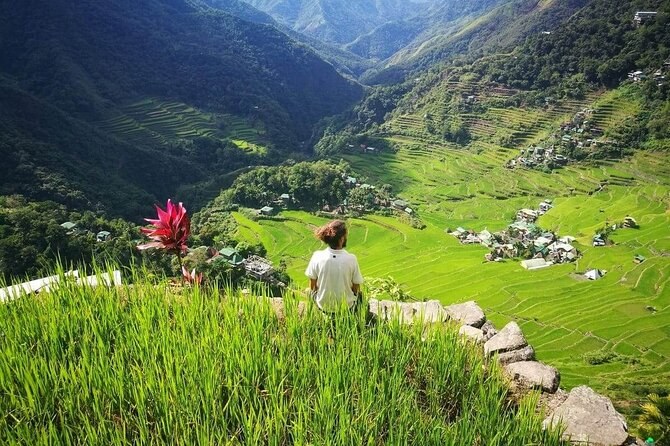
From $360 per person
Check AvailabilityFree cancellation up to 24 hours before
From $282 per person
Check AvailabilityFull refund with 3 days’ notice