
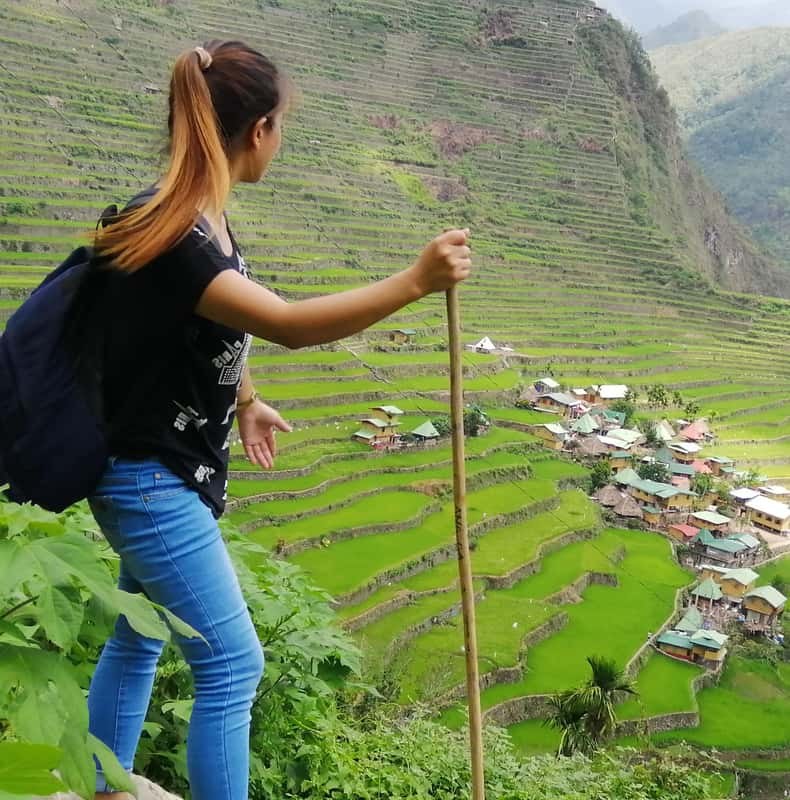
From Manila: Banaue Rice Terraces 3-Day Hiking Adventure
From $295 per person
Check AvailabilityFree cancellation up to 24 hours before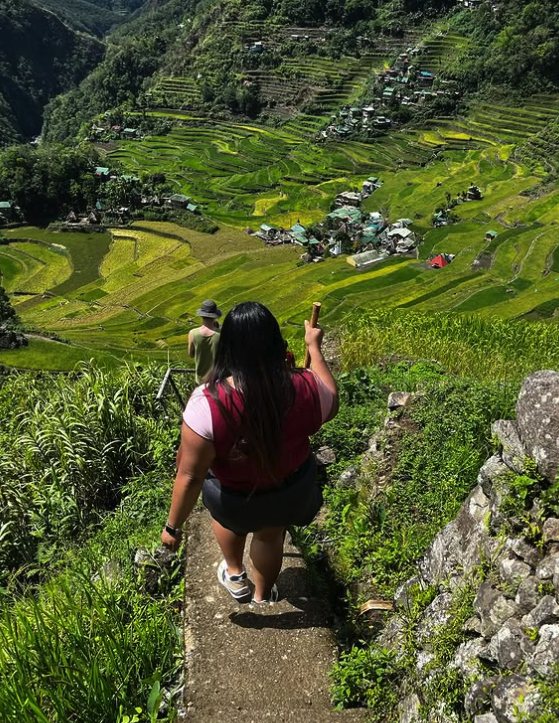
Almost every trip into these valleys runs the same skeleton, and knowing it makes the fares comparable. You travel overnight, you walk for two days, you travel overnight again. The variations are which villages you cross and whether the vehicle is shared.
What follows is the hours, from a nine o’clock departure in Manila to a bus pulling back into the city three mornings later.
Buses leave from two terminals. Ohayami Trans runs from Fajardo Street and Lacson Avenue in Sampaloc; Coda Lines from Monte de Piedad corner Maryland in Cubao. Departures run broadly between seven and ten in the evening.
The ride is roughly nine hours over about 420 kilometres, air-conditioned, with comfort stops. Bring a warm layer: the air conditioning is cold and the road climbs into the mountains overnight. This leg is inside the fare on most trips here. Getting there has both terminals in full.
You arrive in Banaue around seven, which the operators count as the start of day one rather than the end of the journey. Breakfast is usually taken looking over the valley, and this is where you meet the guide who will walk with you.
Expect an hour or so here. It is also the last reliable point for cash, signal and anything you forgot to pack.
Two routes exist and the fare tells you which you are on. The trekking version drives to a drop-off and then walks four to five hours over terrace walls to Pula and on to Cambulo, arriving mid-to-late afternoon. The vehicle-based version takes the jeepney straight to the Batad saddle and walks down instead.
The trekking route is the harder day and the one that earns the trip. You are on terrace walls for hours, the ground is narrow and uneven, and the valley opens steadily below you as you go.
This is the part travellers write about. Dinner is cooked by the family hosting you, and what follows varies: a children’s singing programme in Cambulo, a bonfire and guitars in Batad, rice wine passed round. Some trips build in a storytelling session with village residents.
Accommodation is simple — a bed, a shared bathroom, cold water in places — and it is included in every multi-day fare here. Electricity is limited and signal is patchy or absent.
The main day. Whichever route brought you, day two is the descent into the Batad amphitheatre: terrace walls curving round a natural bowl with the village on the rim above them. Allow half a day for the cluster itself.
From the village a rougher path drops to Tappiya Falls — about an hour down, rather more back up, with a deep cold pool at the bottom you can swim in. It is optional on most itineraries and it is what turns a comfortable day into a hard one. The Batad Rice Terraces page has the descent stage by stage.
The shortest walking day. Routes vary: some go through Anaba village and on to Bangaan, some head west to the Hapao terraces and their hot springs, some simply climb back to the saddle and drive. Two to three hours on foot is typical.
You are back in Banaue by afternoon, and the southbound bus leaves around five or six in the evening, arriving in Manila before dawn.
On a shared trip the group is usually small — caps here run from six to fifteen — and forms in Banaue over breakfast rather than in Manila. You will spend three days with these people, most of it in single file on a terrace wall, and the composition matters more than on a bus tour.
Guides are local, and the ones travellers name afterwards are the ones who set the pace to the slowest walker and explain what you are standing on. Expect one guide throughout, plus a second trekking guide on the routes that cross between villages.
| When | What happens | On foot? |
|---|---|---|
| Night 1, 21:00 | Board the night bus in Manila | No |
| Day 1, 07:00 | Arrive Banaue, breakfast, meet your guide | No |
| Day 1, 09:00–15:00 | Trek to Pula and Cambulo, or jeepney to the saddle | 4–5 hrs |
| Day 1, evening | Village dinner, bonfire, overnight | No |
| Day 2, morning | Cross to Batad and down into the amphitheatre | 2–3 hrs |
| Day 2, afternoon | Tappiya Falls and back (optional) | 2–3 hrs |
| Day 2, evening | Second village night | No |
| Day 3, morning | Out via Anaba and Bangaan, or Hapao | 2–3 hrs |
| Day 3, 17:00 | Night bus south from Banaue | No |
A three-day trip from Manila, hour by hour.
Compare every Banaue Rice Terraces tour
It works well, and several of the trips here run shared precisely so that one traveller is not paying for a whole vehicle. Reviews on this route include solo travellers who ended up as the only booking on their date and describe the guide tailoring the whole three days round them.
The village nights are where solo travel pays off. A homestay table with a family and three other walkers is a different evening from a hotel restaurant, and it is the part that turns a trip into a memory.
The fourth day almost never goes to a fourth terrace cluster. It goes to Sagada in Mountain Province, four to five hours north-west, for the hanging coffins above Echo Valley and the descent into Sumaguing Cave.
That is a genuine second landscape rather than more of the same, and it costs you one travelling day. Most four-day itineraries do Sagada first and finish in Ifugao. The comparison of the three Cordillera destinations sets out why.
Yes, and one trip here does exactly that: overnight bus both ways with a single day and night in between, running Saturday to Sunday only, with the Friday night spent travelling. It asks for strong fitness rather than moderate, and its listing says so.
It is a real option for anyone whose week will not stretch. It is not the version of this trip to book if you have the third day available.
Breakfast on the first morning is in Banaue town, usually looking over the valley, and it is where most trips start properly. After that it depends entirely on your fare: some trips cover every meal, some cover breakfast only, and some cover none at all.
In the villages you eat what the household cooks, at a shared table, usually rice with vegetables and whatever protein is available. Trips that build in a cultural session serve Ifugao dishes deliberately and explain them. Rice wine appears in the evening more often than not.
What you cannot do is buy a meal on the trail. There is nothing between the villages. Carry snacks and more water than you think you need, particularly on the four-to-five-hour crossings.
A daypack for the walking days and a larger bag you can leave at the guesthouse in Banaue, if your route returns there. On trips that cross from village to village you carry everything, which is the argument for packing light and for hiring a porter at the saddle.
Shoes with real grip matter more than anything else. Add a rain layer whatever the month, a warm top for the evenings, cash in small notes, a swimsuit if your route reaches Tappiya Falls, insect repellent and a power bank. Village electricity is limited and signal is patchy below the saddle.
It sometimes does, and the mountain road is the reason. An hour or two late into Banaue compresses the first day rather than cancelling it — guides adjust the route, and the crossing to Cambulo can be shortened or the drop-off moved.
What it can cost you is the Tappiya Falls option on day two, because that is the flexible piece. If the waterfall is the thing you came for, say so at breakfast on day one rather than at lunch on day two.
Build one buffer night into your wider trip rather than flying out of Manila the same morning your bus arrives back. The southbound leg is the one where a delay has nowhere to go.
Two failure modes. The first is trying to add a fourth cluster to a three-day trip, which converts walking hours into vehicle hours. The second is booking the tightest possible connection out of Banaue on the last day and losing the morning to watching the clock.
The last vehicles up from the Batad saddle to Banaue leave in the late afternoon, and the climb out takes an hour you may not have budgeted. Every multi-day trip in the Banaue Rice Terraces tours listings already builds the village night in, which removes the problem entirely.
By night bus, in about nine hours over roughly 420 kilometres. Ohayami Trans runs from Sampaloc in Manila and Coda Lines from Cubao in Quezon City, both leaving in the evening and arriving around seven the next morning. Most these trips include that seat, or drive you up privately instead.
In village homestays and small inns, mostly in Batad, Cambulo or Banaue town. Rooms are simple — a bed, a shared bathroom, cold water in some places — and that is part of what people come for. Every multi-day trip here includes the nights in its fare.
Yes, and most trips give you time to. The pool at the bottom is deep and cold, and the walk down from Batad village takes about an hour on a rough path with the return climb harder than the descent. Bring a swimsuit and a dry bag.
Every guided way into the terraces is compared on price, walking distance and what the fare covers: banaue rice terraces hiking tours. The full list sits on Banaue Rice Terraces Tours.
Trips that run the three-day shape this guide sets out.
From $295 per person
Check AvailabilityFree cancellation up to 24 hours before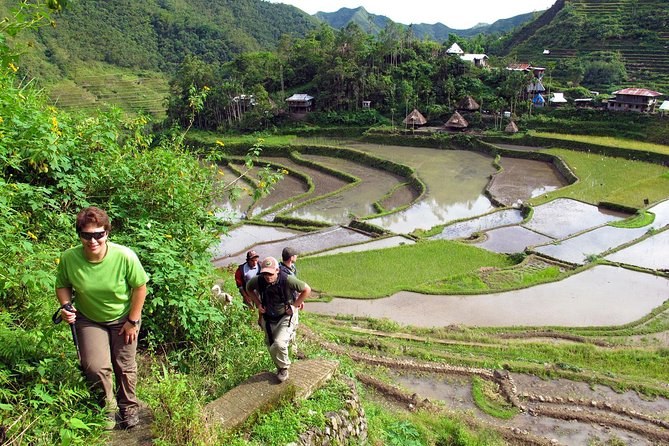
From $270 per person
Check AvailabilityFull refund with 6 days’ notice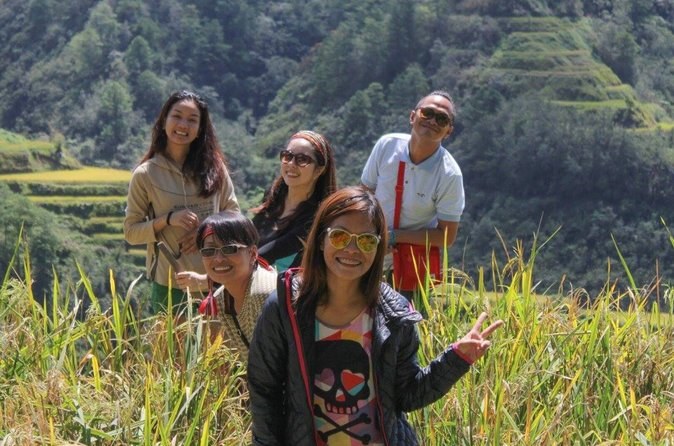
From $282 per person
Check AvailabilityFull refund with 3 days’ notice