
Banaue Rice Terraces, Sagada or Baguio: Which Cordillera Trip Suits You?
The short version
- Banaue — World Heritage rice terraces and village trekking. Nine hours from Manila.
- Sagada — hanging coffins, caves and pine forest in Mountain Province. Four to five hours further.
- Baguio — a highland city, not a landscape. Six hours from Manila and the usual gateway.
- Two in one trip works. Three in four days is a bus tour.
Search for a Cordillera trip and you will be sold all three destinations in a single package, sometimes in four days. They are genuinely different places doing genuinely different jobs, and the itinerary that includes all of them usually delivers none of them properly.
Here is what each one is actually for. Every banaue rice terraces hiking tours that combines two of them is compared on length, price and how much of each you actually get.
Banaue: the terraces
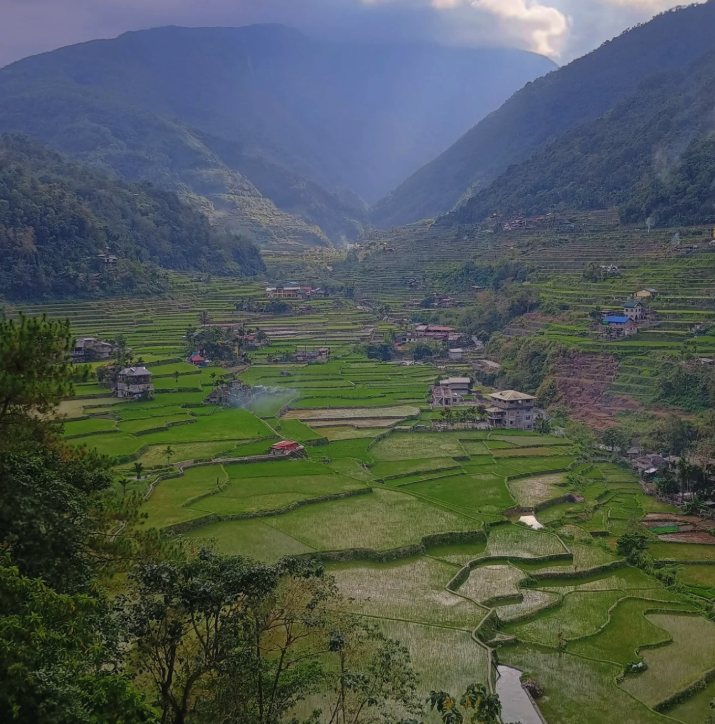
Banaue is farmland on a scale that stops people talking. Hand-cut terraces climb the valleys of Ifugao province, two of the clusters inside the municipality carry a World Heritage listing, and the good version of a visit involves walking between villages that no road reaches.
What it is not is a town with things to do. Banaue town itself is small and functional. You come for the valleys, you sleep in a homestay, and the evenings are conversation rather than nightlife.
Sagada: caves, coffins and pine
Four to five hours north-west in Mountain Province, and a completely different landscape — pine forest, limestone, cooler air. The draws are the hanging coffins on the cliffs above Echo Valley, the descent into Sumaguing Cave, and a town with cafes, weaving workshops and its own coffee.
Sagada is the more comfortable destination and the more sociable one. It is also where people go when they want a few days of doing very little between activities, which Banaue does not really offer.
Baguio: the gateway, not the destination
Baguio is a highland city of several hundred thousand people, about six hours north of Manila, and it is the usual entry point to the Cordilleras. It has parks, markets, a university and traffic. What it does not have is a landscape you travel for.
Plenty of independent travellers route through Baguio to reach Sagada and Banaue, and that is a perfectly good plan. Treating it as a third attraction alongside two World Heritage valleys is where itineraries go wrong.
If you are coming from Baguio rather than Manila, travel to Banaue independently by public bus and pick up a trip that starts there. Those fares are lower precisely because the journey is not included, so you are not paying twice for transport you have already arranged.
| Destination | The draw | From Manila | Days it earns |
|---|---|---|---|
| Banaue | World Heritage terraces, village trekking | ~9 hours | 2–3 |
| Sagada | Hanging coffins, Sumaguing Cave, pine forest | ~12 hours | 2 |
| Baguio | A highland city and the usual gateway | ~6 hours | 1, in transit |
What each destination is for, and what it costs you in travel time.
Compare every Banaue Rice Terraces tour
Can you combine them?
Banaue and Sagada, yes, and several four-day trips do exactly that. The road between them takes four to five hours through Bontoc, so the pairing costs you one travelling day and buys you a second landscape. That is a good trade if you have the fourth day.
All three in four days is where it stops working. You would spend roughly thirty hours in vehicles to see three places for a few hours each, and Baguio is the one that adds least.
Which order?
Most four-day itineraries do Sagada first and Banaue second, and there is a reason: the terraces are the thing you want fresh legs and clear weather for, and putting them last means the trip builds rather than tails off.
The reverse also exists and works if your return flight is out of Manila and you would rather end somewhere with cafes than somewhere with a nine-hour bus.
If you only have three days
Pick Banaue. It is the World Heritage site, it is the harder one to do independently, and the village-night experience has no equivalent in Sagada. Three days gives you the viewpoint, a proper walk into Batad and a night in the valley without rushing. Visiting the terraces has the practical side.
Four-day trips that add Sagada tend to carry a three-day refund window rather than 24 hours, because they hold beds in two provinces. If your dates might move, check the window on the banaue rice terraces tour comparison before you pay.
What each one asks of your legs
Banaue is the most physical of the three by a distance. The good version involves an hour of steady climbing out of a valley on uneven ground, and often four to five hours between villages on the days in between. Nothing is technical; all of it is sustained. Visiting the terraces sets out what that asks of an ordinary walker.
Sagada asks less, but not nothing: Sumaguing Cave is a wet limestone scramble and the walk to the hanging coffins is a short descent. Baguio asks nothing at all beyond city walking, which is part of why it works as a stop rather than a destination.
Where you sleep in each
This is the difference nobody mentions and the one travellers remember. In Banaue you sleep in village homestays and simple inns — a bed, a shared bathroom, cold water in places — often in a village with no road. In Sagada there are guesthouses and small hotels with hot showers and cafes downstairs.
Baguio has hotels in the ordinary sense. If comfort at the end of the day matters to you, that ranking is worth knowing before you book, because it does not track the price. The terrace clusters page covers which valleys have beds at all.
Getting between them
Banaue to Sagada runs four to five hours by van or bus through Bontoc, on mountain road the whole way. Baguio to Sagada is a similar length. Manila to Banaue is the nine-hour overnight leg that most itineraries build in, and getting there has the operators and terminals.
What this means in practice is that any two of the three costs you most of a travelling day to connect. Budget it as a day, not as a transfer.
The honest recommendation
Three days: Banaue alone, walked properly. Four days: Banaue and Sagada, in that order or the reverse. Six days or more: add the third province and take the pressure off. Baguio is a place you pass through on the way, and that is not a criticism of it.
Every combination on offer is compared on Banaue Rice Terraces Tours.
Frequently asked
Can I visit the Banaue Rice Terraces from Baguio?
You can reach Banaue from Baguio by public bus, and it is a common route for travellers already in the Cordilleras. None of the guided trips listed here departs from Baguio, though — every one starts in Metro Manila or in Banaue itself.
Is the road to Banaue safe?
It is a long mountain road, well travelled by scheduled operators every night of the week. Buses are air-conditioned with comfort stops, and the ride is best thought of as tiring rather than alarming. Bring a warm layer, because the air conditioning runs cold at altitude.
How long is the drive from Manila?
Nine to ten hours each way, and the listings agree on that figure — one states 420 kilometres and nine to ten hours on its own itinerary. Overnight departures exist precisely so the driving happens while you sleep.
Tours that fit this trip
Two provinces in four days works. Three in four days is a bus tour.
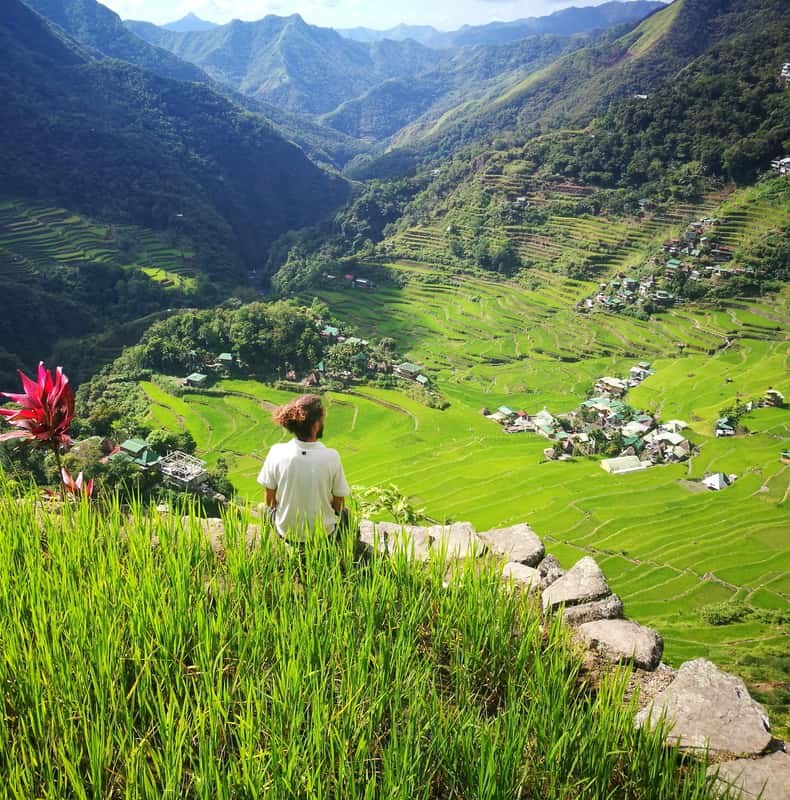
From Manila: 4-Day Sagada and Banaue Rice Terraces Tour
From $285 per person
Check AvailabilityFull refund with 3 days’ notice
Sagada and Banaue Rice Terraces 4-Day Tour
From $360 per person
Check AvailabilityFree cancellation up to 24 hours before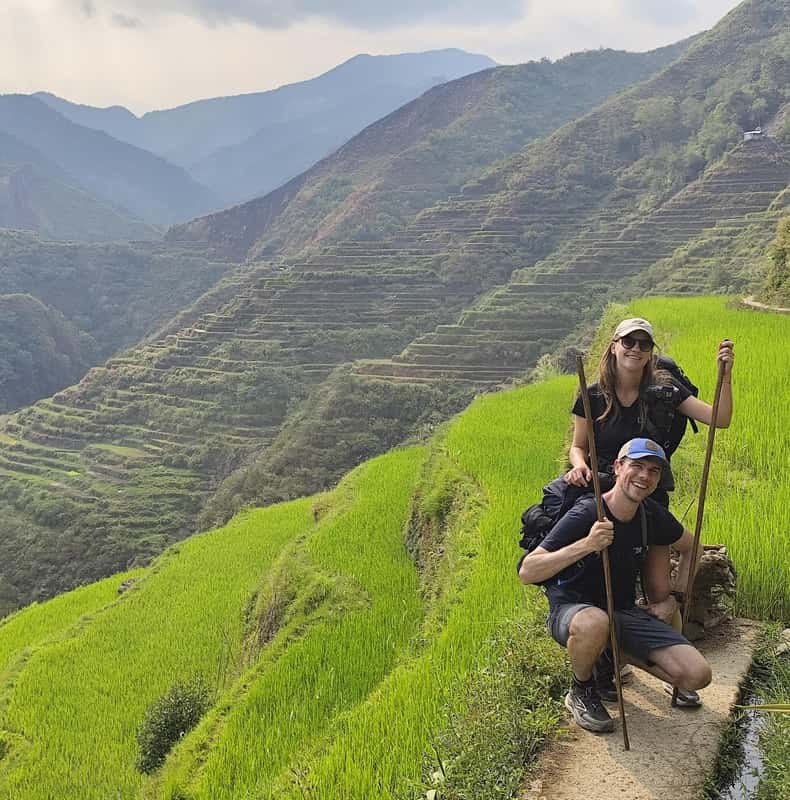
Banaue Rice Terraces and Sagada 4-Day Tour
From $612 per person
Check AvailabilityFree cancellation up to 24 hours before