
Are the Banaue Rice Terraces Worth the Nine-Hour Trip from Manila?
The short version
- Yes, if you walk into a valley. Batad on foot, a village night, and the terraces stop being scenery.
- Probably not, if you stop at the roadside viewpoint. Eighteen hours of bus for one photograph is a poor trade.
- Three days is the threshold. Below that the travel outweighs the trip.
Nine hours each way on a mountain road, to look at farmland. Put like that it is a fair question, and the answer is genuinely conditional — not on the terraces, which are extraordinary, but on what you plan to do when you arrive.
Here is the answer in full, and what separates the travellers who come back delighted from the ones who wonder what the fuss was. Every banaue tour package is compared on exactly that difference.
What the journey actually costs you
About nine hours each way, overnight, on a scheduled air-conditioned bus with comfort stops. You sleep through most of it and arrive at breakfast, which is the whole point of the night departure. It is tiring rather than gruelling.
The platforms measure this honestly. The most-reviewed trip here publishes its own breakdown alongside a 4.9 overall: guides at 5.0, value at 4.6, and transport at 3.9. That last figure is the bus, and nobody pretends otherwise.
The case against
If your plan is to arrive, take a tricycle up to the roadside viewpoint, photograph the terraces and get the next bus out, then no — that is eighteen hours of travel for about forty minutes of looking. The photograph will be good. It will also be the same photograph everybody else has.
The roadside terraces above Banaue town are, in fact, the one cluster left out of the World Heritage inscription. If the listing is your reason for coming, the viewpoint alone does not deliver it.
The case for
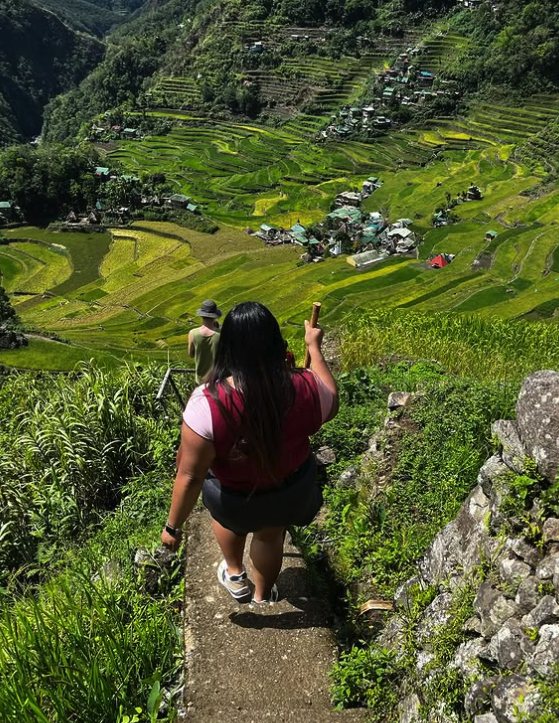
Walk down into Batad and the arithmetic changes completely. Forty-five minutes below a mountain saddle, a bowl of terrace walls opens around a village that no road reaches, and you are standing on a wall somebody's family built and still maintains.
Add a night in Cambulo or Batad and it changes again. What travellers write about afterwards is almost never a view: it is the children singing, the bonfire, the rice wine, the meal cooked by the family hosting them, and the guide who explained how the water gets from the forest to the field.
These terraces are not a monument. They are worked every year by the families who live in them, and the walking routes cross land somebody is farming. That is what a living cultural landscape means, and it is the part a photograph cannot show you.
| What you do | Time on the ground | Worth nine hours each way? |
|---|---|---|
| Roadside viewpoint only | About an hour | No |
| Viewpoint plus a Batad day trip | One long day | Marginal |
| Batad with a night in the village | Two days | Yes |
| Multi-day trek through Cambulo and Batad | Three days | Comfortably |
What you get out of the trip, by how much of it you actually do.
Compare every Banaue Rice Terraces tour
When to choose somewhere else
Anyone who cannot manage an hour of steady uphill on uneven ground will find the best of this place out of reach, and the honest alternative is real: a car-and-driver hire reaching Bangaan from the road, the Hapao terraces and the hot springs below them makes a genuinely good two days with no descent at all.
Travellers with only three days in the Philippines will get more from somewhere closer. Two of those days would be travel, and there are landscapes within a couple of hours of Manila that give more back per hour spent moving.
What you would be giving up instead
Three days in the Cordilleras is three days not spent on an island, and that is the real comparison most travellers are making. The honest framing is that these are different holidays: one is a beach and a boat, the other is a working landscape and a village you walk into.
People who come north and love it tend to be the ones who wanted the second thing all along. People who wanted the first thing usually find the bus long and the terraces green.
What the fare actually buys
On this route a guided trip is not a convenience purchase. It is a bus seat booked in both directions, transport inside a valley with almost no public transport, a bed in a village of a few hundred people, the fees handled at each barrier, and somebody who knows which terrace wall is a path.
Several trips add every meal on top of that. The cheapest fare here is a three-day guided trek, which surprises people. Visiting the terraces breaks down what each shape of trip covers.
When it is definitely worth it
If you have four days and you add Sagada, the arithmetic stops being close. Two provinces, two landscapes, caves and terraces, for roughly what a single-province trip costs. The comparison of the three Cordillera destinations sets out why that pairing works and the three-way one does not.
If you are travelling in the flooded months and the reflections are what drew you, that is also a yes. Best time to visit has the months.
What makes the difference
It comes down to one decision, taken before you book: are you going to look at the terraces, or walk in them? Everything else — which operator, which cluster, how many days — follows from that, and the fare difference between the two versions is smaller than people expect.
The trips that include the bus, the beds, the fees and the food are not the expensive ones. The cheapest fare here is a three-day guided trek. Compare what each one actually covers across every banaue rice terraces tour before assuming the budget option is the roadside one.
So: worth it?
Yes, on one condition. Give it three days and put your boots on. The terraces reward the people who walk into them and are politely unremarkable to everybody else, which is unusual and rather good. The Batad page sets out exactly what that walk involves.
Every trip that does it properly is on Banaue Rice Terraces Tours.
Frequently asked
How long is the drive from Manila?
Nine to ten hours each way, and the listings agree on that figure — one states 420 kilometres and nine to ten hours on its own itinerary. Overnight departures exist precisely so the driving happens while you sleep.
Where do I sleep on a multi-day trek?
In village homestays and small inns, mostly in Batad, Cambulo or Banaue town. Rooms are simple — a bed, a shared bathroom, cold water in some places — and that is part of what people come for. Every multi-day trip here includes the nights in its fare.
Tours that fit this trip
If you are only going as far as the viewpoint, the honest answer is probably not.
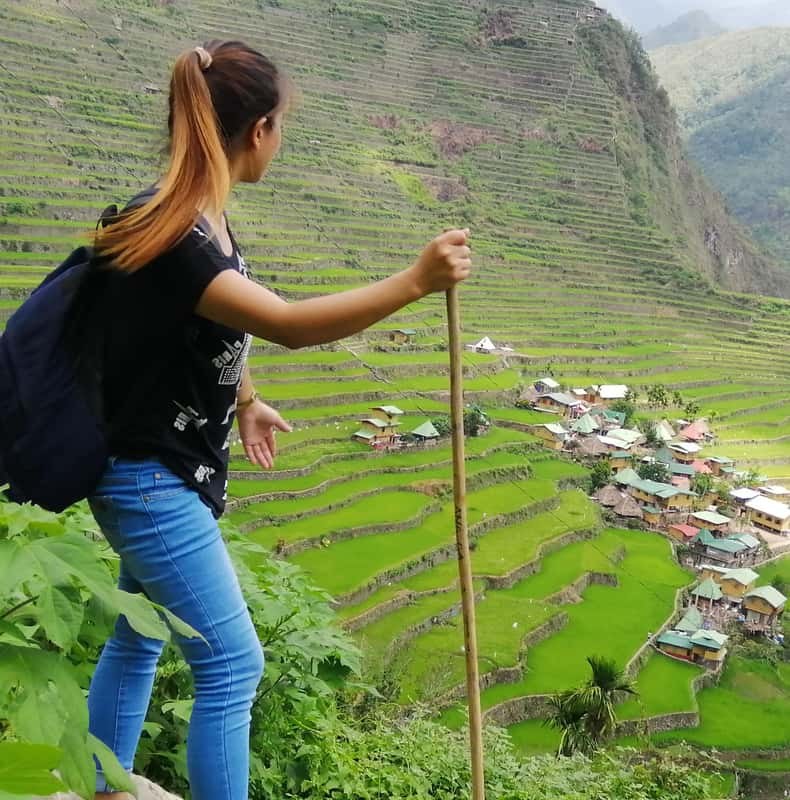
From Manila: Banaue Rice Terraces 3-Day Hiking Adventure
From $295 per person
Check AvailabilityFree cancellation up to 24 hours before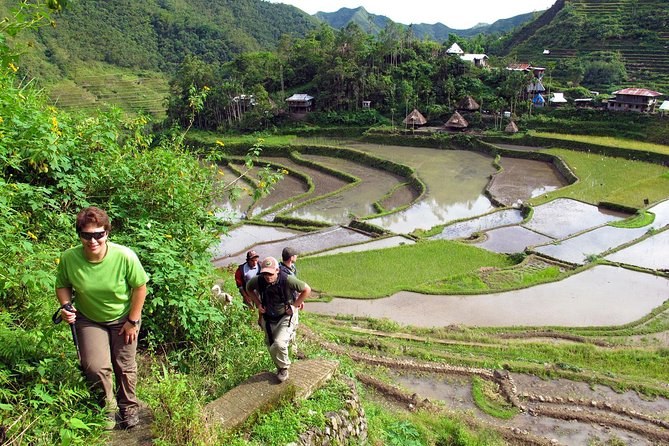
Small-Group Weekend Hiking Tour to Banaue-Ifugao from Manila
From $270 per person
Check AvailabilityFull refund with 6 days’ notice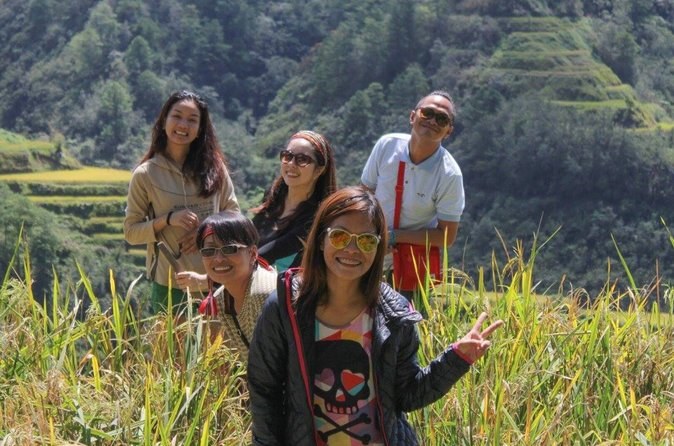
Banaue and Batad Rice Terraces Cultural Immersion and Trekking
From $282 per person
Check AvailabilityFull refund with 3 days’ notice