
Inside the Banaue Rice Terraces: A Guide to Every Cluster, Village and Viewpoint
The short version
- Batad — the walled amphitheatre, World Heritage, reached on foot only.
- Bangaan — a village sitting inside its own terraces, World Heritage, visible from the road.
- Hapao — wide stone-walled terraces in Hungduan with hot springs below them.
- The Banaue Viewpoint — the famous one, and the one that is not inscribed.
People arrive expecting one view and find half a dozen separate terrace systems spread across steep valleys, each reached differently. Knowing which is which is the difference between booking the trip you wanted and booking the one whose photograph you saw.
Here is every cluster, what it looks like, and how you get into it. Every banaue rice terraces tour visits a different combination of them.
The Banaue Viewpoint
Fifteen minutes above the town by tricycle, on the roadside, with a cafe and a signboard and Ifugao elders in traditional dress who sit for photographs. This is the view on the thousand-peso note and on almost every image captioned Banaue.
It is also the one cluster left out of the World Heritage inscription. Modern building in and around the terraces lowered its integrity score when the property was assessed. It remains a declared National Cultural Treasure, and it is still worth standing in front of — it simply is not the thing UNESCO listed.
Batad
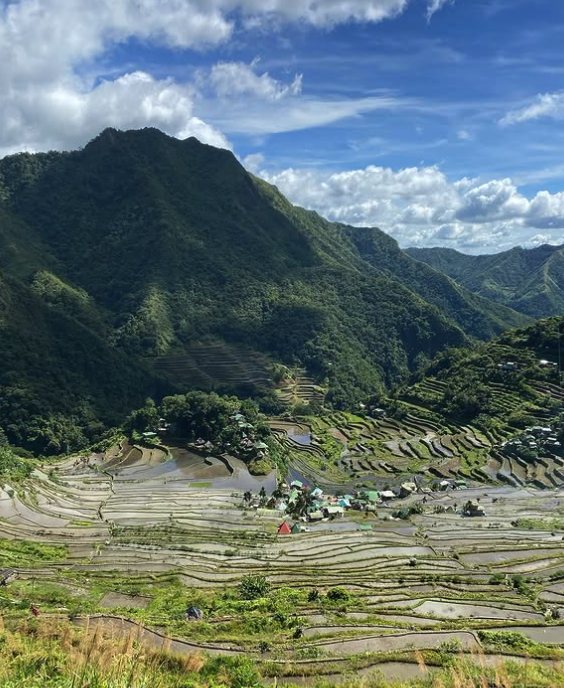
The one people describe afterwards. Terrace walls curve around a natural bowl in tiers so tight the village sits on the rim looking down into its own fields. No road reaches it: a jeepney takes you twelve kilometres to a mountain saddle and the last stretch is on foot.
It is inscribed, it is where Tappiya Falls is, and it is where most multi-day trips sleep. If you walk into one cluster, walk into this one — the Batad Rice Terraces page has the descent stage by stage.
Bangaan
The second inscribed cluster inside Banaue municipality and the easier of the two to reach: the road passes above it and the whole village sits in the middle of its terraces like an island. Cluster, village and valley read as one object from the viewpoint.
Most three and four-day trips stop here on the way out. Walking down takes about half an hour and is far gentler than Batad, which makes it the answer on a day when steep ground is not appealing.
Hapao and the Hungduan cluster
An hour west in the neighbouring municipality of Hungduan, and part of the inscribed Hungduan cluster. The terraces are wider and flatter than Batad's, running for kilometres with stone retaining walls rather than packed mud.
The draw beyond the terraces is the natural hot springs in the river below, which is why Hapao is usually the last stop rather than the first. Getting there covers the road west.
Cambulo and Pula
Walking villages, reachable on foot and nothing else. Cambulo sits between Banaue and Batad, four to five hours from a road on either side. Pula is smaller and higher, roughly halfway.
Neither is inscribed and neither needs to be. They are where the trekking trips stop for the night, and they are what travellers write about afterwards — the singing, the bonfire, the rice wine, the homestay run by the family farming the terrace outside the door.
The three clusters outside Banaue
The inscription covers five clusters and only two are in Banaue. Mayoyao Central lies well east, Nagacadan south towards Lagawe in Kiangan, and Hungduan west. All are reachable by road and none is on a standard three-day itinerary.
If you are the kind of traveller who wants to say you have seen the whole inscribed property, you need a week and your own vehicle. Almost nobody does this, and almost nobody should.
| Cluster | Municipality | Inscribed? | Access |
|---|---|---|---|
| Batad | Banaue | Yes | On foot from the saddle |
| Bangaan | Banaue | Yes | From the road, or a short walk down |
| Hungduan (Hapao) | Hungduan | Yes | By road, ~1 hour west |
| Mayoyao Central | Mayoyao | Yes | By road, well east |
| Nagacadan | Kiangan | Yes | By road, south |
| Banaue Viewpoint | Banaue | No — National Cultural Treasure | Tricycle, 15 minutes |
The five inscribed clusters, and where the famous view sits.
Compare every Banaue Rice Terraces tour
Stone walls and mud walls
Two construction types run through these valleys and you can tell them apart on sight. Stone-walled terraces use fitted dry stone and hold their shape for generations. Mud-walled terraces are packed earth held together by grass roots, cheaper to build and far more work to keep.
Batad and Bangaan are largely stone, which is part of why they survived the assessment. The history page covers what happened to the rest.
If you have three days, do not try to see four clusters. Pair the roadside viewpoint with one proper walk and one village night. Adding a fourth valley means spending the day in a vehicle looking at things you could have walked through.
So which should you book?
The honest answer is a viewpoint and a walk. Almost every trip pairs the Banaue Viewpoint with a descent into Batad, and that combination gives you both the photograph and the thing the photograph cannot carry.
Beyond that the choice is a second walking day, a gentler second cluster, or a soak at the end. Compare what each fare covers on Banaue Rice Terraces Tours.
Frequently asked
How do I get from Banaue to Batad?
By jeepney or tricycle to the Batad saddle, about twelve kilometres and roughly 45 minutes on a rough mountain road, then on foot down into the village. The walk from the saddle to the viewpoint takes about 45 minutes down and closer to an hour back up. Guided trips arrange the vehicle for you.
Are the Banaue Rice Terraces a UNESCO World Heritage Site?
Partly, and the distinction is worth having. The inscribed property is the Rice Terraces of the Philippine Cordilleras, listed in 1995, and it covers five clusters — two of which, Batad and Bangaan, sit inside Banaue municipality. The famous roadside terraces at the Banaue Viewpoint are not part of the inscription, though they are a declared National Cultural Treasure.
Which terraces should I actually visit?
Batad if you only do one. It is the walled amphitheatre that carries the World Heritage listing, and reaching it on foot is the experience people describe afterwards. Add the Banaue Viewpoint for the classic photograph, Bangaan for a village sitting inside its own terraces, and Hapao if you want hot springs.
Tours that fit this trip
Every cluster above sits on at least one of the trips below.
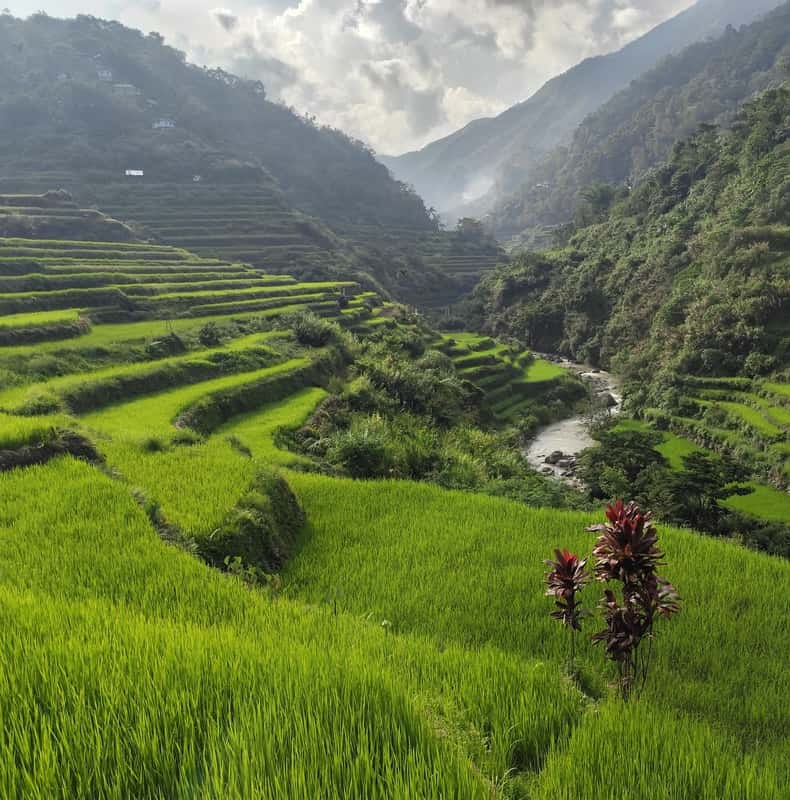
Banaue-Batad: 3-Days Guided Trek with Meals & Accommodation
From $214 per person
Check AvailabilityFree cancellation up to 24 hours before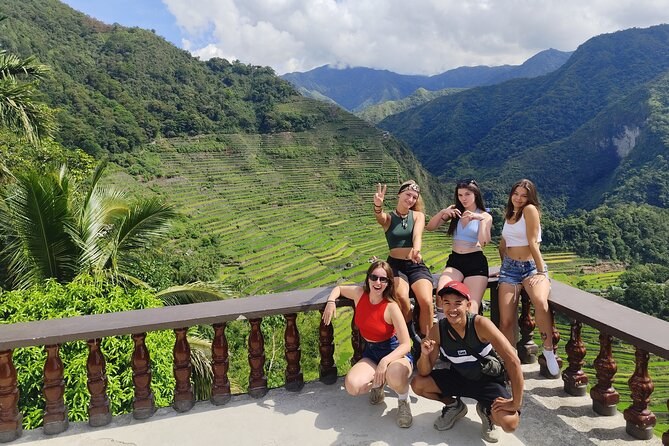
Banaue Rice Terraces Hiking Tours
From $236 per person
Check AvailabilityFree cancellation up to 24 hours before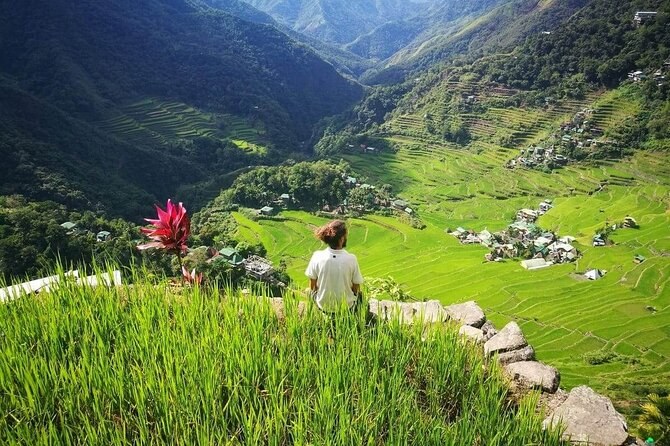
Sagada and Banaue Rice Terraces 4-Day Tour
From $360 per person
Check AvailabilityFree cancellation up to 24 hours before